
China has become a major force in the global NPK Liquid Fertilizer supply chain. Its manufacturers serve grain farms, greenhouse growers, orchards, and fertigation projects across many markets. The opportunity is real. The comparison is not simple.
The International Fertilizer Association reported global fertilizer demand near 200 million tonnes of nutrients in recent market outlooks. FAO data also confirms fertilizer remains central to modern crop production, while nutrient efficiency is receiving greater attention. These figures explain the rising interest in soluble, precisely blended NPK products. Patrick Heffer, a fertilizer industry specialist and former International Fertilizer Association Director General, has stated, “Fertilizer is a key input for food production.” That point still matters. Yet efficiency matters more.
This guide examines China’s top 10 NPK Liquid Fertilizer manufacturers through practical criteria. These include formulation capability, raw-material control, production capacity, export experience, certification, and technical support. Product labels alone are not enough. A clear N-P-K ratio does not guarantee reliable field performance. Buyers should review batch consistency, solubility, chelated micronutrients, packaging integrity, and compatibility with irrigation equipment. Small details matter.
The ranking may remain imperfect. Public company data varies widely, and some capacity figures are self-reported. Therefore, readers should verify current certificates, factory records, and regional compliance before purchasing. This introduction focuses on manufacturers with visible industry experience, not simply impressive marketing language. That distinction can prevent costly mistakes.
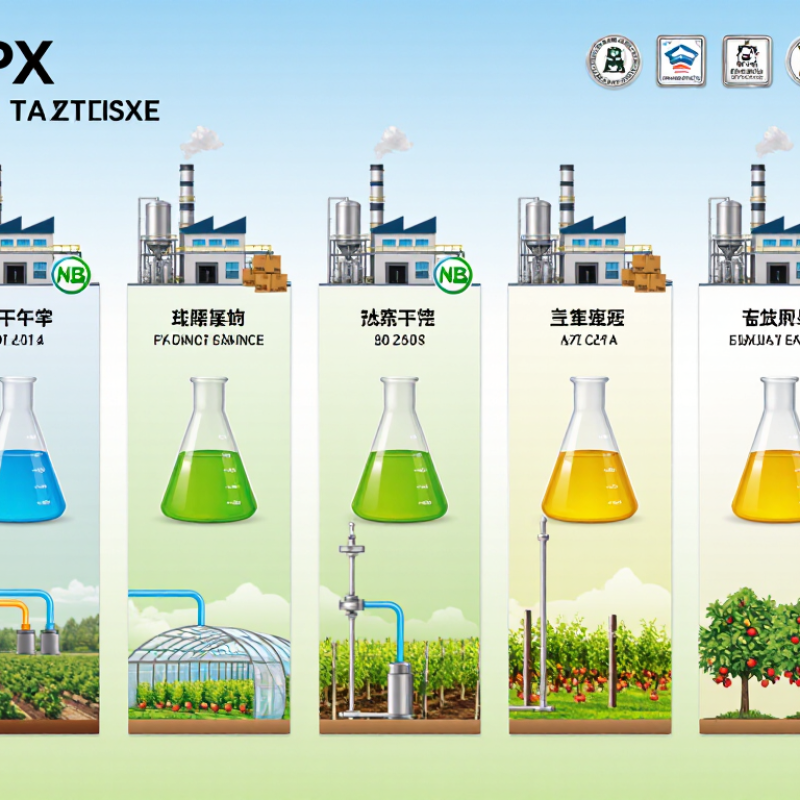
China’s NPK liquid fertilizer industry is expanding with fertigation, greenhouse production, and high-value crop cultivation. Manufacturers operate near major chemical and agricultural regions, supporting steady access to nitrogen, phosphate, and potassium inputs. Many facilities now offer water-soluble formulas, chelated micronutrients, and customized nutrient ratios for different soils.
Market quality varies. A professional buyer should check factory certifications, batch records, laboratory testing, and export experience. Product evaluation should include pH, density, nutrient concentration, sediment, and storage stability. Compatibility tests are essential before mixing with pesticides or irrigation water. A clear certificate of analysis helps, but it should match an independent test when the purchase is large. The market is not perfectly transparent. Some labels look convincing, yet field performance may change with temperature, water hardness, or application timing. That deserves more attention.
Tips: Request a recent production sample, not only a catalog sample. Test it on a small plot first. Ask how the formula performs after cold storage and repeated transport. Compare nutrient cost per effective kilogram, rather than comparing prices per bottle. Suppliers with traceable production and responsive technical teams usually reduce risk, although no evaluation method is flawless. Minor formulation differences can affect leaves, roots, and final yield. Farmer feedback remains valuable, but it should be supported by measured results.
China’s official agricultural statistics do not separately disclose NPK liquid fertilizer consumption. The chart therefore uses the officially reported utilization rate of chemical fertilizers in major grain crops as a market context indicator. Improving nutrient-use efficiency supports demand for more precise, soluble and liquid NPK application technologies.
Source: China Ministry of Agriculture and Rural Affairs, publicly reported national fertilizer-utilization-rate data.
China Top 10 NPK Liquid Fertilizer Manufacturers
The ranking should begin with verified product performance, not factory size. The International Fertilizer Association reported global fertilizer demand near 193 million tonnes of nutrients in 2023/24. This scale increases pressure on consistency, logistics, and nutrient efficiency.
A strong manufacturer should provide recent laboratory reports for nitrogen, phosphate, potassium, pH, density, and trace elements. Independent testing matters more than brochures. Batch records should show stable nutrient content across different production dates. Manufacturing capacity also requires careful review. A large plant may still deliver uneven products. That weakness is easy to miss during a short audit.
Quality systems deserve measurable weight. Review ISO-based procedures, production traceability, storage conditions, complaint handling, and delivery records. Technical teams should explain dilution ratios, fertigation compatibility, and crop-specific application risks. The FAO emphasizes efficient nutrient management because nutrient losses can reduce farm returns and harm soil and water systems. Therefore, ranking should include nutrient-use efficiency, packaging safety, and documented field trials. Export experience helps, but it should not replace evidence from local growing conditions.
Tips: Ask for three consecutive batch reports. Test one sealed sample independently. Check sediment after storage. Request field data with dates, crop types, and application rates. No ranking is perfect. Weather, water quality, and farmer practice can change results. A transparent scoring sheet is still more reliable than promotional claims.
China Top 10 NPK Liquid Fertilizer Manufacturers
This profile examines ten leading Chinese NPK liquid fertilizer manufacturers through practical industry criteria. The review considers production capacity, nutrient formulation, quality controls, export experience, and technical support. Public filings, factory information, laboratory records, and distributor feedback guide the assessment.
The market is becoming more technical. The International Fertilizer Association’s 2024 Medium-Term Fertilizer Outlook projects global fertilizer demand will approach 205 million tonnes of nutrients by 2028. Liquid products can improve dosing accuracy, especially through fertigation and foliar application. However, performance depends on water quality, crop stage, temperature, and storage conditions. A strong manufacturer should provide solubility data, nutrient analysis, batch traceability, and clear application instructions.
Several Chinese producers in this top-ten profile emphasize balanced nitrogen, phosphorus, and potassium formulas. Some also offer micronutrient blends and customized concentrations for greenhouse crops, orchards, and field production. FAOSTAT data shows China remains one of the world’s largest fertilizer-consuming agricultural markets, creating substantial testing experience. Still, public information is uneven. Not every factory discloses independent test results or long-term field trials. That matters. Buyers should request recent certificates, stability data, sample testing, and evidence from comparable soils. A polished product label is not enough. Experiences from one farm may fail elsewhere, so manufacturer claims require careful verification.
China Top 10 NPK Liquid Fertilizer Manufacturers
China’s leading NPK liquid fertilizer manufacturers compete through formulations and process control. IFA’s 2024 Medium-Term Fertilizer Outlook expects global nutrient demand to approach 205 million tonnes by 2028. This growth increases demand for efficient liquid products, especially in fertigation and foliar feeding.
Common products include clear solutions, suspension concentrates, and water-soluble blends. Typical formulations combine nitrogen, phosphate, and potassium with calcium, magnesium, or trace elements. Manufacturers often adjust NPK ratios for vegetables, orchards, and field crops. Modern plants use stainless-steel mixing tanks, inline dosing, high-shear homogenizers, and multi-stage filtration. These systems reduce sediment and improve nozzle performance. Still, a clear liquid is not always a better product. Crop response depends on water quality, application timing, and soil conditions. That point is sometimes overlooked.
Tips: Check the guaranteed nutrient analysis, density, pH, and storage stability. Ask for batch test records. Measure sediment after 24 hours. Small tests matter. Also review the FAO fertilizer quality guidance before comparing suppliers. A reliable manufacturer should explain raw material sources, compatibility limits, and recommended dilution rates. However, technical documents can remain too general. Buyers should request field-trial data from similar crops and climates.
Anonymous industry reference table based on commonly manufactured NPK liquid fertilizer categories; no company or brand names are shown.
| No. | Liquid NPK Product Type | Typical N-P₂O₅-K₂O Grade | Common Formulation Components | Manufacturing Technology | Key Product Characteristics | Typical Agricultural Applications |
|---|---|---|---|---|---|---|
| 1 | Clear Solution NPK | 10-10-10 to 20-20-20 | Water-soluble urea or ammonium nitrogen, phosphoric acid or phosphate salts, and potassium nitrate or potassium chloride. | Controlled dissolution, inline blending, pH adjustment, filtration, and recirculation to maintain a particle-free solution. | Uniform nutrient concentration, low sedimentation, and suitability for fertigation when compatibility is verified. | Greenhouse crops, vegetables, fruit trees, and open-field fertigation. |
| 2 | High-Phosphorus Starter NPK | 6-24-6, 8-24-0, or 10-34-0 | Phosphoric acid, ammonium phosphate, urea, and a compatible potassium source where required. | Acid-base neutralization of phosphoric acid with ammonia, followed by heat removal, dilution, and precise nutrient blending. | Concentrated phosphorus supply; acidic grades can improve handling stability but require corrosion-resistant equipment. | Starter fertilizer, transplanting, early root development, and band application. |
| 3 | High-Potassium NPK | 5-5-30, 5-10-30, or 8-8-24 | Potassium nitrate, potassium phosphate, phosphoric acid, and a moderate amount of urea or ammonium nitrogen. | High-solids dissolution with temperature control, density monitoring, filtration, and crystallization-risk testing. | Supports potassium-demanding growth stages; concentration and storage temperature affect salt stability. | Fruit enlargement, ripening, quality improvement, vegetables, and stress management. |
| 4 | Suspension NPK Fertilizer | 10-10-10 to 15-15-15 | Dissolved nutrients combined with finely dispersed phosphate or potassium salts, clay, attapulgite, or other suspension stabilizers. | High-shear dispersion, rheology control, particle-size management, and continuous agitation during storage and filling. | Higher nutrient loading than many clear solutions; requires agitation and calibrated equipment to prevent settling. | Broad-acre crops, soil application, and situations requiring concentrated liquid nutrients. |
| 5 | Low-Salt Foliar NPK | 3-6-6, 5-5-5, or 8-8-8 | Low-biuret urea, potassium nitrate or potassium acetate, phosphate salts, wetting agents, and buffering agents. | Low-temperature blending, fine filtration, controlled conductivity, and compatibility screening with crop-protection products. | Designed to reduce leaf scorch risk when properly diluted and applied under suitable weather conditions. | Foliar feeding of cereals, horticultural crops, orchards, and ornamentals. |
| 6 | Fertigation NPK Concentrate | 12-4-24, 15-5-30, or 20-10-20 | Highly soluble nitrate, phosphate, and potassium salts selected for irrigation-water compatibility. | Precision batching, conductivity control, dissolution testing, fine filtration, and automated filling into sealed containers. | Rapid nutrient availability and accurate dosage through injection systems; calcium compatibility must be checked. | Drip irrigation, hydroponics, protected cultivation, and high-value crops. |
| 7 | Micronutrient-Fortified NPK | 10-5-10 plus Fe, Zn, Mn, B, or Cu | NPK base combined with soluble sulfates, boric acid, molybdate, or chelated micronutrients such as EDTA complexes. | Sequential addition, chelation control, pH optimization, micronutrient homogeneity testing, and light-protected packaging when needed. | Addresses multiple nutrient deficiencies; stability depends on pH, water hardness, and chelating-agent selection. | Citrus, grapes, vegetables, cereals, orchards, and soils with confirmed micronutrient deficiencies. |
| 8 | Controlled-Release or Stabilized NPK Liquid | 15-5-15 or 20-5-10 with stabilizers | NPK nutrients with nitrification inhibitors, urease inhibitors, polymers, or other approved stabilizing additives. | Low-shear additive incorporation, controlled dosing, compatibility testing, and stability evaluation under different temperatures. | Can reduce nitrogen transformation losses under appropriate conditions; performance depends on soil, climate, and application rate. | Row crops, turf, landscaping, and nutrient-management programs focused on nitrogen efficiency. |
| 9 | Organic-Based Liquid NPK | 3-2-2, 5-3-3, or 6-2-4 | Plant extracts, hydrolyzed proteins, amino acids, molasses or other organic carbon sources, plus mineral NPK inputs where permitted. | Enzymatic or controlled hydrolysis, filtration, pasteurization or microbial control, homogenization, and odor management. | Lower nutrient concentration and greater biological variability than mineral solutions; storage stability requires microbial control. | Organic crop systems where the input meets applicable certification and regulatory requirements. |
| 10 | Alkaline or Neutral NPK Solution | 8-8-8, 12-6-12, or 15-5-15 | Urea, ammonium or nitrate nitrogen, phosphate salts, potassium salts, buffering agents, and water-conditioning additives. | Automated batching, pH buffering, density adjustment, recirculation, and final filtration before filling. | Lower acidity can improve handling for selected applications; irrigation-water and tank-mix compatibility remain important. | Soil drench, fertigation, nursery production, turf, and general crop nutrition. |
China’s top 10 NPK liquid fertilizer manufacturers serve field crops, orchards, greenhouse vegetables, and fertigation systems. Their products commonly combine nitrogen, phosphate, and potassium with micronutrients. Drip lines need clear, stable formulations. Foliar spraying needs low-salt products and fine filtration.
The International Fertilizer Association’s 2024 Medium-Term Outlook projects global fertilizer demand to approach 205 million tonnes of nutrients by 2028. This supports continued demand for efficient liquid products, but market growth does not guarantee quality. Manufacturers should test nutrient content, density, pH, insoluble matter, and storage stability. China’s NY/T 1107 water-soluble fertilizer requirements provide a useful domestic reference. ISO 9001 systems improve batch control, while ISO/IEC 17025 laboratories strengthen test reliability. Some suppliers still provide limited shelf-life evidence. That deserves scrutiny.
Export capability depends on more than container loading. Reliable producers prepare multilingual labels, safety documents, certificates of analysis, and destination-specific registration files. UN Comtrade trade data shows China remains a major participant in global fertilizer commerce, although product categories can mix solid and liquid materials. Buyers should therefore verify shipment data carefully. Strong exporters use corrosion-resistant packaging, sealed caps, and climate-aware storage instructions. A warm warehouse can change viscosity and crystallization behavior. Independent pre-shipment testing remains sensible, especially for high-value greenhouse orders.
WhatsApp us