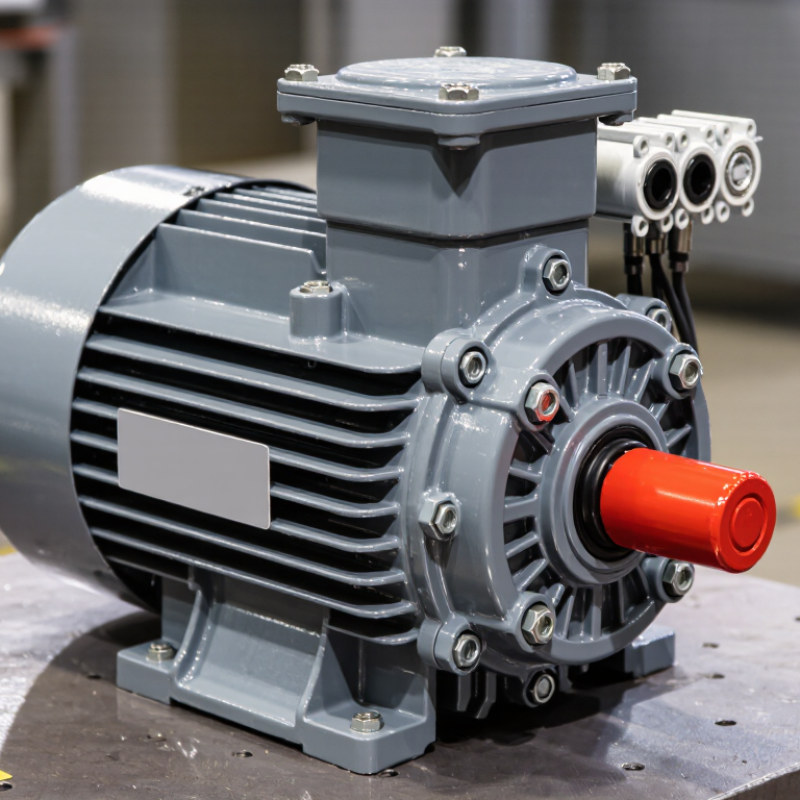
How to Choose Box Design Ex Motors for Global Sourcing?

Choosing Box Design Ex Motors for global sourcing requires more than comparing price, power, and delivery time. These motors may operate near dust, gas, heat, moisture, or frequent starting cycles. A small mismatch can cause overheating, unexpected downtime, or certification problems.

The International Energy Agency’s 4E Electric Motor Systems Annex reports that motor-driven systems consume roughly 40% of global electricity. The U.S. Department of Energy also identifies motor systems as a major source of industrial energy use. These figures explain why efficiency deserves attention before procurement. Yet efficiency alone is not enough. As motor-systems researcher Dr. Martin Doppelbauer states, “Motor efficiency is a system question, not only a nameplate question.”

Look beyond the nameplate.

A reliable sourcing review should check hazardous-area classification, Ex protection method, certification route, voltage, frequency, duty cycle, enclosure rating, cooling method, and terminal-box orientation. IEC 60079 standards provide an important technical reference, while ATEX, IECEx, UL, and local requirements may differ by destination. Certification should be verified through official databases, not only supplier brochures.

The term “Box Design Ex Motors” can also create confusion. Some buyers mean a motor with a specific terminal-box arrangement, while others mean a complete explosion-protected package. That assumption is risky. Confirm drawings, certificates, test conditions, spare-part availability, and factory quality records.

A low purchase price may hide costly rewiring, delayed approval, or unsuitable seals. The better choice is usually the motor that fits the entire operating system. Mistakes still happen, especially when technical details are translated poorly across regions. Careful documentation remains essential.

How to Choose Box Design Ex Motors for Global Sourcing?

Understanding Box Design Ex Motors and Their Applications

Box design Ex motors are enclosed motors built for hazardous industrial areas. Their terminal box, cable entries, and protective enclosure receive special attention. This design helps reduce ignition risks from sparks, hot surfaces, or internal faults. Typical applications include chemical pumps, refinery fans, grain conveyors, and underground ventilation equipment.

Selection should begin with the actual site conditions. Check gas or dust classification, temperature class, protection level, voltage, frequency, and starting method. A motor for a dusty milling room may need different protection from one used near solvent vapors. Review the motor’s certification for the destination market, such as IECEx or ATEX requirements. Also examine ambient temperature, altitude, humidity, and corrosion exposure. These details often affect performance more than rated power.

Tips: Match the enclosure protection to the cable gland and terminal box. Confirm shaft load and duty cycle with the equipment supplier. Ask for test records, drawings, certificates, and maintenance instructions. Do not rely only on a catalog image. Small differences in cable entry size can delay installation. I have seen specifications fail because the site temperature was underestimated. That mistake is expensive. Some users also choose a larger motor for safety, but oversizing can reduce efficiency and create starting problems. A practical review with the installer is wiser. Leave room for uncertainty, especially when dust levels or operating cycles are not measured accurately.

Identifying Global Sourcing Requirements and Compliance Standards

When sourcing box design Ex motors, define the hazardous area before comparing prices. Confirm whether the site contains gas, vapor, mist, or combustible dust. Zone classification, equipment group, and temperature class must match the operating environment. A motor for Zone 1 may not suit a Zone 2 installation.

Ask suppliers for complete compliance evidence. Depending on the destination, this may include IECEx, ATEX, or local certification requirements. Certification should cover the motor, terminal box, cable glands, and accessories. Check the protection concept, such as flameproof, increased safety, or dust protection. Do not accept a certificate that covers only a similar model. Small design changes can affect approval status.

Technical sourcing also requires practical details. Confirm voltage, frequency, starting current, duty cycle, mounting position, shaft dimensions, brake needs, and ambient temperature. Review the enclosure rating and corrosion protection for coastal or chemical sites. Request routine test records, serial-number traceability, material details, and installation instructions in the required language. Ask how replacement parts preserve the original certification.

A factory audit can reveal more than a polished datasheet. Inspect sealing surfaces, cable entries, nameplates, and inspection records. I have seen projects delayed because the gland thread standard was overlooked. That mistake is avoidable. Still, local interpretation can differ, so involve an independent certification specialist before placing a large order. Specification reviews are not paperwork alone. They protect people, schedules, and long-term equipment reliability.

How to Choose Box Design Ex Motors for Global Sourcing? - Identifying Global Sourcing Requirements and Compliance Standards
Category Data Dimension Global Sourcing Requirement Typical Selection Data Relevant Standard or Regulation Documentation to Request Priority
Hazardous Area Gas or dust classification Identify whether the motor will operate in an explosive gas, vapor, mist, or combustible-dust atmosphere. Gas zones 1 or 2; dust zones 21 or 22; or North American Class I, II, or III locations. IEC 60079-10-1 for gas; IEC 60079-10-2 for dust; NFPA 70 for Class and Division systems. Area classification drawing, hazardous-area study, and end-user installation requirements. Required
Explosion Protection Protection concept Select a protection method that matches the classified area and motor construction. Ex db flameproof enclosure; Ex eb increased safety; Ex ec equipment protection level for less hazardous areas; or dust protection by enclosure. IEC 60079-0 and applicable protection-type requirements in the IEC 60079 series. Certificate of conformity, certificate schedule, and complete marking information. Required
Equipment Group Gas or dust group Choose equipment suitable for the specific substance group because ignition sensitivity and enclosure requirements differ. Gas groups IIA, IIB, or IIC; dust groups IIIA, IIIB, or IIIC. IEC 60079-0 equipment-group classifications. Hazardous-substance data sheet and motor certificate showing the approved group. Required
Temperature Temperature class and maximum surface temperature The motor surface temperature must remain below the ignition temperature of the surrounding hazardous material. Gas: T1 to T6; dust: maximum surface temperature in °C, including the specified dust layer condition. IEC 60079-0 and IEC 60079-7 or IEC 60079-1, depending on protection concept. Temperature-class marking, thermal test data, and ambient-temperature limits. Required
Certification Market Regional approval route Confirm the approval system accepted in the destination country before placing the purchase order. IECEx certification; ATEX certification for the European Union; or local certification for other jurisdictions. IECEx system; ATEX Directive 2014/34/EU; applicable national regulations. Valid certificate, certificate number, marking photograph, and certification scope. Required
North America Class, Division, or Zone approval For North American projects, verify that the marking matches the site classification method. Class I, Division 1 or 2; Class II; Class III; or Zone 1/2 and Zone 21/22 configurations. NFPA 70, UL 1203, CSA hazardous-location requirements, and approved certification scheme. Listing or certification record, installation instructions, and hazardous-location marking. Conditional
Electrical Rating Rated power, voltage, frequency, and speed Match the motor to the available power supply and driven-equipment duty. Typical industrial ranges: 0.12–315 kW; 230/400 V or 400/690 V; 50 or 60 Hz; 2-, 4-, 6-, or 8-pole designs. IEC 60034-1 for rotating-machine ratings and performance. Technical data sheet, nameplate drawing, winding connection diagram, and test report. Required
Efficiency Energy-efficiency class Specify an efficiency level that meets local energy-efficiency rules and total-cost objectives. IE3 is commonly specified for general industrial motors; IE4 may be selected where regulations and design permit. IEC 60034-30-1 and the energy-efficiency requirements applicable in the destination market. Efficiency test report, loss data, and declared efficiency class at rated load. Recommended
Ingress Protection Enclosure protection rating Select protection against dust, water, washdown, and outdoor exposure based on the installation environment. IP55 for many indoor industrial installations; IP56, IP65, or IP66 where greater water or dust protection is required. IEC 60034-5 and IEC 60529. IP test report, enclosure drawing, cable-entry details, and drain-plug information. Required
Ambient Conditions Ambient temperature, altitude, and humidity Confirm the motor’s thermal capability under actual site conditions rather than relying only on standard ratings. Common reference ambient: −20 to +40 °C; altitude normally up to 1,000 m unless derating is calculated. IEC 60079-0 and IEC 60034-1; project-specific environmental requirements. Derating curve, allowable ambient range, altitude correction, and humidity limitations. Required
Variable-Speed Operation Variable-frequency drive compatibility Verify that the motor certificate and thermal design permit operation with the proposed inverter or drive. Approved speed range, minimum cooling speed, inverter-duty insulation, shaft-voltage mitigation, and permitted switching frequency. IEC 60079-14 for electrical installations in explosive atmospheres; IEC 60034-17 and IEC 60034-25 for converter-fed motors. VFD compatibility statement, speed-torque curve, thermal protection requirements, and certificate limitations. Conditional
Thermal Protection Winding and bearing temperature monitoring Use thermal sensors where overload, restricted cooling, high ambient temperature, or variable-speed operation may occur. PTC thermistors, RTDs, embedded thermal switches, or approved bearing sensors. IEC 60079 installation requirements and the motor certificate conditions of use. Sensor type, resistance data, terminal arrangement, trip settings, and control-circuit diagram. Recommended
Mechanical Design Mounting, frame, shaft, and bearings Ensure interchangeability with the driven machine and compatibility with the required coupling or belt arrangement. IEC frame sizes; B3 foot mount; B5 flange mount; B35 combined mount; keyed shaft; standard or insulated bearings as required. IEC 60072 for dimensions and IEC 60034 series for rotating-machine requirements. Outline drawing, shaft-load limits, bearing schedule, mounting dimensions, and balancing grade. Required
Materials and Environment Corrosion and weather resistance Match paint system, fasteners, seals, and enclosure materials to chemical exposure and outdoor conditions. Epoxy or marine-grade coating; stainless-steel fasteners; sealed terminal box; tropicalization where required. Project coating specification, ISO 12944 where corrosion category is specified, and certificate limitations. Coating system, dry-film thickness, material certificates, and corrosion-resistance test information. Conditional
Cable Entry Cable glands and blanking elements Cable-entry components must maintain the motor’s hazardous-area protection and enclosure rating. Certified glands matching cable diameter, thread type, armor, gas group, dust group, and IP requirement. IEC 60079-1, IEC 60079-7, IEC 60079-14, and applicable gland certification requirements. Gland certificates, thread specification, installation torque, sealing instructions, and spare-entry details. Required
Noise and Vibration Acoustic and vibration limits Define acceptable noise and vibration levels to protect reliability and meet plant requirements. Vibration acceptance based on machine size and operating speed; noise target commonly specified in dB(A) at rated load. ISO 20816 for machine vibration evaluation; IEC 60034-9 for acoustic noise. Routine vibration report, noise test method, balancing record, and acceptance criteria. Recommended
Quality Control Routine and type testing Define inspection points before production to reduce certification, dimensional, and performance risks. Insulation resistance, high-voltage withstand, no-load current, vibration, temperature rise, efficiency, and dimensional inspection. IEC 60034-1 and relevant explosion-protection certification requirements. Inspection and test plan, routine test certificates, calibration records, and nonconformance procedure. Required
Supply Chain Lead time, spare parts, and lifecycle support Evaluate the complete supply risk, not only the unit purchase price. Agreed production lead time; critical spare bearings, fans, terminal components, and seals; documented change-control process. Project procurement specification and quality-management requirements. Manufacturing schedule, spare-parts list, warranty terms, service network coverage, and end-of-life notification policy. Recommended
Import and Compliance Customs, labeling, and technical file Prepare documents required for import clearance, site approval, and local inspection. Commercial invoice, packing list, country-of-origin information, product marking, manuals, declarations, and certificates. Destination-country customs rules, ATEX documentation requirements where applicable, and local electrical regulations. Complete document pack in the required language, including nameplate artwork and installation instructions. Required

Comparing Motor Specifications, Protection Types, and Enclosure Designs

How to Choose Box Design Ex Motors for Global Sourcing?

When sourcing box design Ex motors, compare the motor specification before the enclosure finish. Rated power, voltage, frequency, speed, efficiency class, starting current, and duty cycle affect real operating costs. The International Energy Agency and UNIDO report that electric motor systems consume roughly 50% of global electricity. A small efficiency difference can therefore become a large annual expense. IEC 60034-30-1 defines efficiency classes, while IEC 60034-5 helps verify enclosure protection against water and solids.

Protection type must match the hazardous area, not merely the project location. IEC 60079 distinguishes protection concepts such as flameproof enclosures, increased safety, and dust protection. A flameproof box needs accurate joints, strong fasteners, and controlled flame paths. A dust-protected design may require different sealing and temperature limits. IP ratings describe environmental protection, but they do not replace Ex certification. This distinction is often missed.

Tips: Ask for the certificate, temperature class, gas or dust group, IP rating, and ambient-temperature range. Check whether cable glands, terminal boxes, and drain plugs belong to the approved configuration. Compare cast iron and aluminum carefully; weight, corrosion exposure, vibration, and repair access all matter. The U.S. Department of Energy’s motor-system assessments repeatedly emphasize system efficiency, not motor efficiency alone. That is useful, but imperfect: installation losses and poor alignment can erase expected savings. A cheaper enclosure may also create longer maintenance stops. Leave room for that uncomfortable calculation.

Evaluating Manufacturers, Quality Controls, and Supply Chain Capabilities

How to Choose Box Design Ex Motors for Global Sourcing?

A recurring audit lesson is simple: a polished certificate is not enough. For box design Ex motors, buyers should verify the manufacturer’s design competence, testing records, and production consistency. IEC 60079-0 and IEC 60079-1 define essential requirements for explosive atmospheres and flameproof enclosures. The supplier should provide traceable drawings, material certificates, pressure-test results, and verified temperature classifications. Ask where critical parts are produced. Small gaps matter.

Quality controls should reach the assembly line. Inspect enclosure joints, cable entries, bearings, insulation systems, and terminal boxes. Measure flamepath dimensions with calibrated tools, not visual judgment. IEC 60079-based quality systems also require controlled changes and documented inspections. A useful factory audit checks sample records from three production batches. One sample proves little. The International Energy Agency estimates that motor-driven systems consume roughly half of global electricity, making efficiency and reliability commercially significant. Yet efficiency claims can be overstated when testing conditions are unclear.

Supply chain capability deserves equal attention. UNCTAD’s Review of Maritime Transport reports that more than 80% of world trade by volume moves by sea. Therefore, ask for dual-source plans, safety-stock policies, export documents, and realistic lead-time data. Confirm whether spare bearings, fans, and terminal components are locally available. Digital tracking helps, but it cannot replace physical verification. A supplier may promise ten-week delivery, then struggle with one missing gland. That weakness should be recorded, not politely ignored. Perfect sourcing rarely exists. Sensible buyers test the uncomfortable details.

How to Choose Box Design Ex Motors for Global Sourcing?

Procurement scorecard for evaluating manufacturers, quality controls, and supply chain capabilities

This 100-point sourcing model prioritizes hazardous-area certification and traceability, production quality controls, efficiency and performance testing, customization capability, delivery reliability, and after-sales support. Buyers can adjust the weighting according to project risk, destination-market regulations, and required delivery speed.

Selecting Suppliers Through Cost, Testing, Certification, and After-Sales Support

When sourcing box-design Ex motors globally, price is only the first visible number. Compare the landed cost, not just the quotation. Ask suppliers to separate motor price, packaging, freight, duties, inspection, and spare parts. A low quote can hide weaker bearings, limited copper content, or expensive replacement components. Request a three-year operating estimate, including energy use and planned maintenance. Small efficiency differences can become significant across continuous-duty equipment.

Testing should match the motor’s real working conditions. Request load, temperature-rise, vibration, insulation, noise, and enclosure-protection results. Ask whether tests were performed on the actual model or a similar prototype. That detail matters. Certification documents must identify the exact enclosure design, protection method, temperature class, rated output, and production location. Verify certification status through the issuing body’s public database. Requirements can vary by destination, industry, and installation zone. Never treat a certificate image as complete evidence.

After-sales support deserves the same attention as engineering. Confirm response times, troubleshooting channels, spare-parts availability, warranty limits, and local service capability. A supplier should provide wiring diagrams, installation instructions, maintenance schedules, and clear fault codes. Ask for examples of previous export support, with customer details protected. I still see buyers overvalue the lowest offer and underestimate downtime. That is an avoidable mistake, though not every risk can be predicted. A written escalation process helps when delivery, testing, or field performance goes wrong.