Choosing the right filler masterbatch is crucial for product quality. It impacts not only performance but also costs and sustainability. With various options available, selecting the best one can be overwhelming.
Filler masterbatch enhances the properties of plastic products. It improves strength, reduces costs, and can even modify appearance. However, the wrong choice can lead to inferior results. Color, size, and type of filler significantly influence the final product.
Understanding your specific requirements is essential. Manufacturers often struggle with balancing performance and cost-efficiency. An informed decision can enhance product durability and reduce waste. Careful evaluation of these elements proves vital for successful applications.
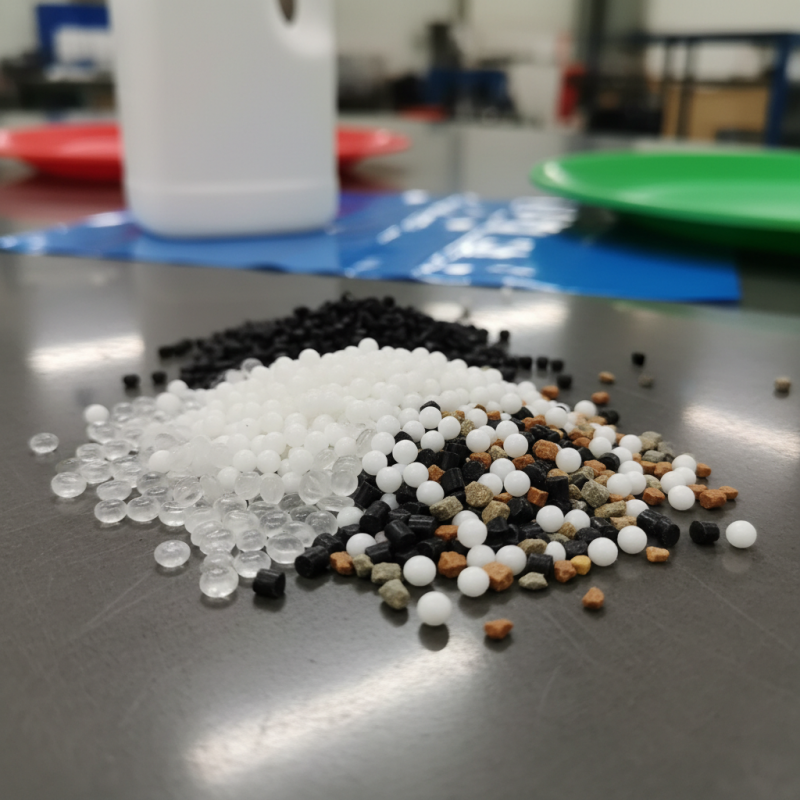
Filler masterbatch is crucial in plastic manufacturing. It is a concentrated mixture of additives and fillers. The right choice helps improve product quality while reducing costs. According to industry reports, filler masterbatch can reduce production expenses by 15% to 30%. This makes it essential for manufacturers aiming to enhance their bottom line.
Choosing the appropriate filler requires understanding its functions. For instance, calcium carbonate is a common filler known for its cost-effectiveness. It not only minimizes costs but also enhances the physical properties of plastics. Some manufacturers find themselves relying too heavily on fillers without considering their long-term effects. This can lead to a decline in product performance or aesthetic appeal over time.
Moreover, the filler’s compatibility with the base polymer is vital. If not, issues like poor dispersion may arise. A report indicated that improper filler selection resulted in a 20% reduction in product lifespan for some companies. Balancing quantity and quality is necessary. It’s crucial to test different fillers to find the right mix. Overconfidence in one type may cause unexpected challenges in production.
Choosing the right filler masterbatch is critical for product quality. Key factors include filler type, compatibility, and processing conditions. A study by the Plastic Industry Association indicates that up to 60% of plastic product defects stem from incompatible fillers. It’s essential to assess the specific application. For example, calcium carbonate is popular for enhancing stiffness but may reduce impact strength.
Another factor is the desired dispersion of the filler. Uneven distribution can lead to weak spots in the final product. Reports show that products with poor dispersion can lose up to 30% of their strength. Testing in different environments can help identify how the filler interacts with the base material. Additionally, it’s wise to consider the end-use scenario. Will the product be exposed to harsh conditions? This can influence filler selection significantly.
Cost-effectiveness is also a concern. While cheaper fillers may seem attractive, they can lead to increased wastage and production downtime. Data reveals that companies often face a 15% drop in overall efficiency due to poor filler choices. Understanding the balance between cost and performance is vital. Each decision in the selection process can have long-term implications for profitability and product success.
| Tip No. | Factor | Description | Considerations |
|---|---|---|---|
| 1 | Filler Type | Choose between calcium carbonate, talc, or kaolin based on application. | Evaluate cost and performance trade-offs. |
| 2 | Particle Size | Understand how finer versus coarser particles affect the end product. | Influences opacity, strength, and surface finish. |
| 3 | Compatibility | Ensure compatibility with the polymer matrix used in production. | Incompatibility can lead to poor dispersion and quality issues. |
| 4 | Additive Characteristics | Check for the presence and type of additives in the masterbatch. | Additives can enhance properties like UV resistance or antistatic behavior. |
| 5 | Color Stability | Assess the color stability of the filler during processing and in end products. | Color shifts may affect product appeal and marketability. |
| 6 | Cost-Effectiveness | Analyze the cost vs. performance metrics for selected fillers. | Low-cost fillers may affect product quality if not chosen carefully. |
| 7 | Processing Temperatures | Consider the processing temperatures of the filler and polymer combined. | High temperatures can lead to degradation of certain fillers. |
| 8 | Environmental Impact | Evaluate the environmental impact of fillers and their source. | Consider sustainability and regulatory compliance. |
| 9 | Supplier Reliability | Choose suppliers with a proven track record for consistency and quality. | A reliable supplier can impact production schedules and quality. |
| 10 | Sample Testing | Always perform sample tests before full-scale production. | Early detection of issues can save time and costs. |
When selecting filler masterbatches, compatibility with base polymers is crucial. Different polymers have varying properties. Understanding these differences helps ensure optimal performance. For example, polypropylene and polyethylene have distinct melting points. If the filler doesn’t match, issues like phase separation may arise. This can lead to inefficiencies in the final product.
Pay attention to particle size and shape as well. Fillers with irregular shapes may disrupt the flow properties of the polymer blend. This could cause uneven distribution within the base polymer. Testing each combination in small batches can highlight potential problems. Consider conducting compatibility tests to analyze how well the filler integrates with the base polymer.
Monitoring processing temperatures is also important. Exceeding the thermal tolerance of a filler may degrade its properties. Some fillers are sensitive to heat, which can alter their effectiveness. Analyzing the thermal characteristics of both the filler and the polymer will guide in making the right choices. Adapting the approach based on real-time feedback can lead to better outcomes.
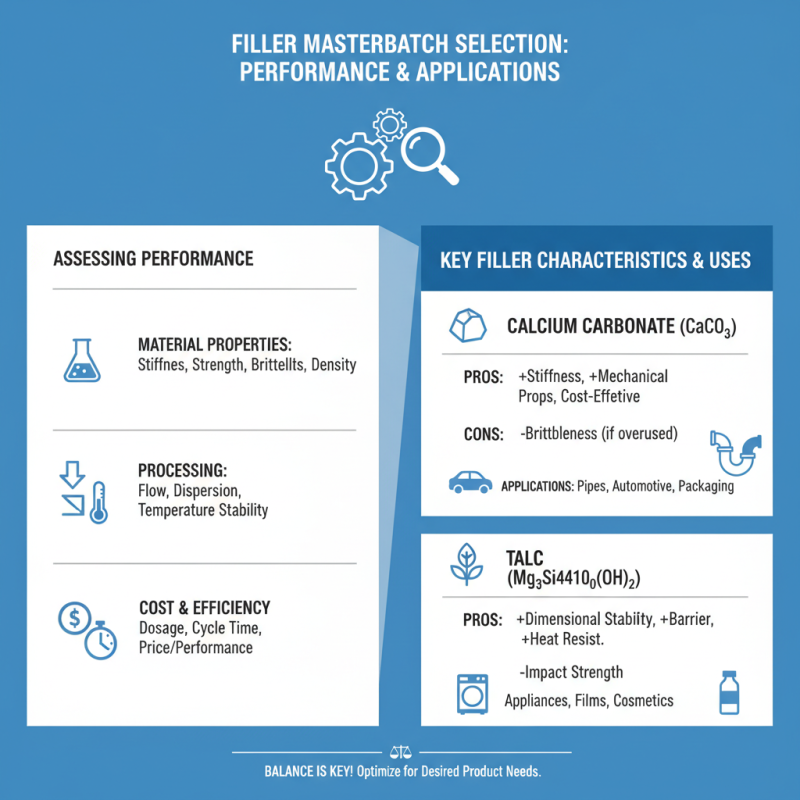
When selecting the right filler masterbatch, assessing performance characteristics is crucial. Each filler has unique properties that define its effectiveness. For instance, calcium carbonate provides excellent stiffness and improves mechanical properties. However, it can lead to increased brittleness if overused. Balancing performance with desired characteristics is essential.
Applications vary widely across industries. In automotive manufacturing, fillers enhance rigidity and reduce weight. They can also improve the cost-efficiency of materials. In contrast, the packaging sector often requires flexibility. Using fillers that offer a balance between strength and pliability is vital here. It's important to test different formulations to ensure they meet specific needs.
Not every filler will perform as expected. Variations in particle size can alter outcomes significantly. Sometimes, the right filler may not blend well with other materials. Troubleshooting these issues requires careful analysis. Observing how different fillers respond during processing can offer insights. Always keep an open mind to refining choices based on real-world performance.
When selecting a filler masterbatch, the balance between
cost-effectiveness and quality is crucial. A lower-priced filler may seem appealing at first.
However, it might not deliver the necessary performance. Identifying fillers that ensure
durability and compatibility with your materials is key.
Understanding your production process can help in this decision. For instance, if the filler causes processing issues, it
can lead to higher costs down the line. Evaluate suppliers and materials thoroughly.
Request samples to test their performance in real conditions.
You might find that a higher-quality filler leads to fewer defects. This could mean less waste and lower overall costs.
Keep in mind that sometimes you pay more upfront, but it saves money later.
Always weigh the pros and cons. Remember, cheaper isn't always better.
Quality can prevent future headaches.
Stay mindful of how filler choices impact your final product.
WhatsApp us