How to Choose the Best White Masterbatch?
Choosing the best white masterbatch starts with the application, not the brightest sample. A packaging film, injection-molded cap, and agricultural sheet require different performance priorities. Whiteness matters, but dispersion, opacity, carrier compatibility, dosing efficiency, and processing stability often determine the final result.
PlasticsEurope reported global plastics production at approximately 400 million tonnes in 2022. Its industry data also identified packaging as the largest plastics-use sector. These figures show why color consistency and material efficiency matter across high-volume production. Smithers’ market analyses further highlight growing demand for advanced masterbatch solutions, especially those supporting lightweighting, recycled content, and improved process control. However, market reports should guide decisions, not replace factory trials.
A reliable selection process compares titanium dioxide concentration, pigment grade, particle dispersion, moisture content, and thermal resistance. It also checks whether the carrier resin matches polyethylene, polypropylene, PET, or another polymer. The wrong carrier can create streaks, plate-out, weak weld lines, or unstable dosing. Small details become expensive quickly.
Test the product on your actual machine. Use the intended resin, screw speed, temperature profile, and recycling ratio. Measure color difference, opacity, melt flow, tensile performance, and filter pressure. A supplier’s technical data sheet is useful, but independent verification is stronger. No single grade wins every test. That is the uncomfortable part.
The best white masterbatch balances appearance, cost, processing reliability, and end-use requirements. Review suppliers against documented quality systems, traceable raw materials, technical support, and consistent batch performance. Then question your own assumptions. A brilliant laboratory plaque may still fail beside a production line running continuously.
Define White Masterbatch and Its Role in Plastic Manufacturing
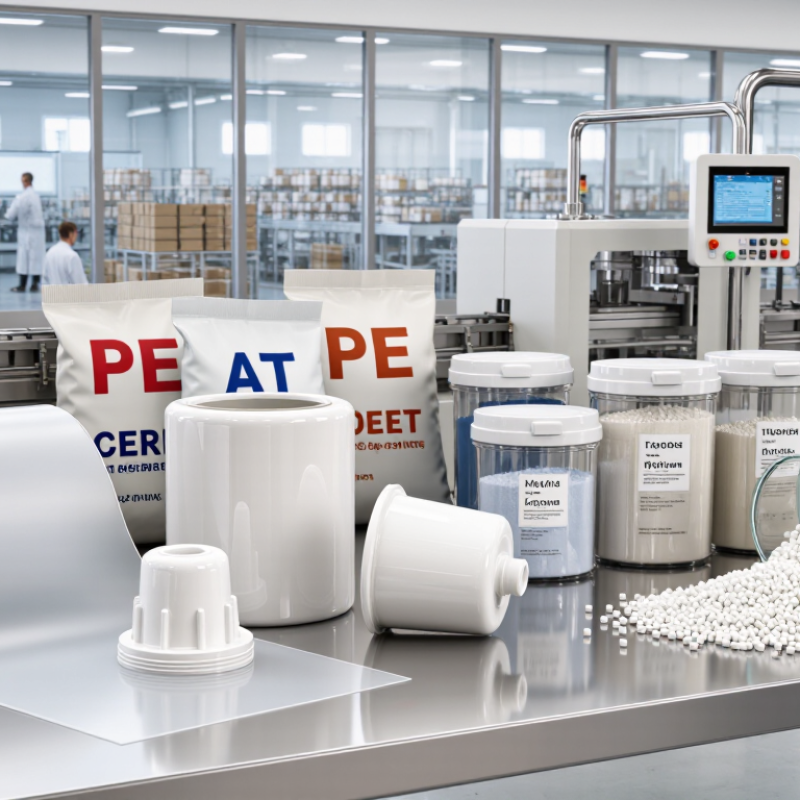
White masterbatch is a concentrated additive used to whiten, opacify, and improve the appearance of plastic products. It usually contains titanium dioxide dispersed in a polymer carrier. During extrusion or injection molding, processors blend it with natural resin. The concentrate then distributes pigment through the melt. A good formulation can produce clean color, stable coverage, and consistent surface quality.
Its role is practical, not decorative alone. White masterbatch can reduce visual defects, mask recycled resin variation, and support UV protection when the formulation is designed for it. The correct choice depends on resin compatibility, pigment concentration, dispersion, processing temperature, and the required whiteness. PlasticsEurope reported global plastics production of 400.3 million tonnes in 2022, showing the scale of applications where color consistency matters. The OECD Global Plastics Outlook recorded 353 million tonnes of plastic waste in 2019, with only 9% recycled. This makes recycled-content coverage increasingly important, although high opacity may require more pigment and careful cost control.
In factory trials, compare plaques made at the same let-down ratio. Check L*, opacity, melt pressure, filter residue, and pellet moisture. A laboratory result can mislead. Film, pipe, and injection grades often need different dispersion behavior. A cheaper concentrate may also create die lines or uneven brightness. Sometimes, the “best” grade is simply the one that remains stable across ordinary production variation. That judgment needs testing, not a brochure.
How to Choose the Best White Masterbatch?
Definition and Role in Plastic Manufacturing
White masterbatch is a concentrated mixture of titanium dioxide pigment, carrier resin, and processing additives. It is diluted into a polymer during manufacturing to provide whiteness, opacity, UV protection, and consistent color.
How to read the chart: A representative white masterbatch formulation contains approximately 60% titanium dioxide, 35% carrier resin, and 5% additives. When selecting a grade, check pigment loading, dispersion quality, carrier compatibility, processing temperature, and the opacity required by the final plastic product.
Assess Opacity, Whiteness, and Dispersion Requirements
How to Choose the Best White Masterbatch?
Opacity, whiteness, and dispersion should guide your white masterbatch selection. They are related, but they are not identical.
A bright-looking pellet may produce weak coverage in a thin film. Test samples at the actual let-down ratio, processing temperature, and film thickness. Place the film over both black and white backgrounds. Strong opacity should hide the black surface with minimal pigment loading. Measure whiteness with L*, a*, and b* values when possible. A high L* value indicates brightness, while a negative b* value often suggests a bluish white. However, excessive blue tone can make some products appear cold or unnatural.
Dispersion deserves equal attention. Poorly dispersed titanium dioxide can create streaks, specks, filter pressure, or uneven color. Examine a film under magnification and inspect the screen pack after processing. A compatible carrier resin usually supports smoother mixing and fewer defects. I have seen a masterbatch perform well in one extruder but fail in another. Small changes in screw design, shear, or residence time can matter. This is why laboratory results should not be treated as final proof.
Tips: Keep the test method consistent. Compare identical film thicknesses and cooling conditions. Record pigment loading, torque, pressure, and visual results. If opacity improves only after heavy dosing, question the dispersion quality. A cheaper formulation may become expensive through waste, reprocessing, and customer complaints. Test again. That step is easy to skip.
Match the Carrier Resin with the Target Plastic Application
How to Choose the Best White Masterbatch?
Match the Carrier Resin with the Target Plastic Application
The carrier resin must match the plastic being processed. It controls dispersion, flow, and compatibility. A poor match can create streaks, weak weld lines, or surface defects. In film production, a polyethylene carrier usually blends smoothly with polyethylene and improves pigment distribution. For polypropylene parts, a compatible polypropylene carrier is often safer. Small differences matter.
Consider the processing temperature, too. High-temperature engineering plastics need a carrier that remains stable during molding. A low-temperature carrier may degrade, darken, or release unwanted odor. For polyester applications, moisture control is critical. Dry the resin and masterbatch according to technical data. One missed drying step can ruin an otherwise careful trial.
The end product also changes the choice. Injection-molded housings may need strong opacity and consistent flow. Thin films require excellent dispersion without excessive stiffness. Test several let-down ratios on the actual machine, not only in a laboratory plaque. Check color strength, gloss, surface uniformity, impact performance, and filter pressure. Ask for pigment content, carrier details, processing guidance, and batch consistency records. A glossy sample can mislead. Sometimes, a slightly lower loading gives better processing. Recheck it under real production conditions.
Verify Supplier Reliability, Compliance, Cost, and Technical Support
Choosing the best white masterbatch starts with supplier reliability, not the lowest quotation. Request batch-level certificates of analysis, retained samples, production dates, and traceability records. Verify pigment loading, moisture, melt flow, dispersion, and colour difference under your actual processing conditions. The ISO Survey 2022 reported more than 1.26 million ISO 9001 certificates worldwide, but certification alone does not guarantee consistent masterbatch quality. Audit corrective-action records and recent delivery performance. A small trial order often reveals more than a polished presentation.
No supplier is perfect.
Compliance must match the application. Ask for current safety data sheets, restricted-substance declarations, and supporting test reports. Food-contact, toy, medical, and recycled-plastic applications require different evidence. The OECD Global Plastics Outlook found that only 9% of plastic waste was recycled in 2019, increasing pressure for traceable and responsible material choices.
Measure the real costCost should be measured per finished kilogram, not per masterbatch kilogram. Compare let-down ratio, opacity, rejected parts, filter changes, energy use, and freight.
Look beyond the quotationA cheaper pellet can become expensive through unstable colour or poor dispersion. Technical support should include processing trials, troubleshooting guidance, and response-time commitments.
Ask whether engineers can explain pigment selection, carrier compatibility, and equipment limits. I would also test support after the sale, because promised expertise sometimes disappears. Practical reliability is demonstrated during a difficult production shift.