
Metal Forging is a manufacturing method that shapes heated or room-temperature metal under controlled compressive force. Unlike casting, it works with solid material and can refine its internal grain flow. That difference often supports strength in shafts, connecting rods, pressure components, and aircraft fittings. The process is not simply “hitting metal.” Engineers select hot, warm, or cold forging according to alloy behavior, geometry, tolerance, and production volume. Open-die forging suits large, simple forms, while closed-die forging creates repeatable details with matched tooling. Ring rolling produces seamless ring-shaped parts for turbines, bearings, and industrial equipment.
A reliable forging route begins with material verification and billet preparation. It continues through heating, die alignment, forming, trimming, heat treatment, and inspection. Temperature matters. Too much heat can increase oxidation or grain growth, while insufficient heat may raise forming loads and create defects. Experienced teams monitor dimensions, surface condition, hardness, and non-destructive test results. Those checks connect workshop practice with engineering requirements and traceable quality records. Applications range from automotive driveline parts to energy, construction, medical, and aerospace systems. However, forging is not automatically the best choice. Tooling costs, material waste, shape limits, and post-machining needs require honest comparison. This guide examines major Metal Forging types, process stages, benefits, and practical applications. It also considers where expectations can fail. Clear decisions come from evidence, not slogans.
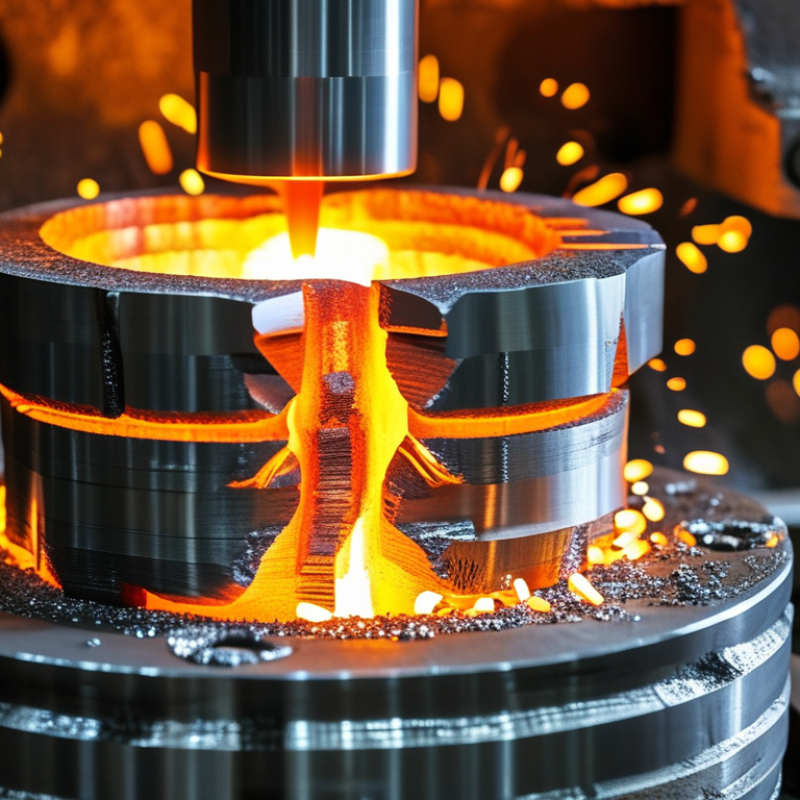
Metal forging shapes heated or cold metal through controlled compression. A hammer, press, or die forces the material into a planned geometry. Pressure changes everything. Unlike cutting, forging moves metal fibers instead of removing large sections. This can improve strength, fatigue resistance, and structural consistency.
The U.S. Department of Energy describes forging as a near-net-shape process that can reduce material waste compared with machining from solid stock. A 2024 market analysis by Grand View Research estimated the global metal forging market at more than 40 billion U.S. dollars in 2023. The estimate varies by product scope, so readers should check the report methodology.
PROCESS CONTROL Temperature, deformation speed, lubrication, and grain flow control the result. Hot forging improves formability, while cold forging offers tighter dimensions and a cleaner surface. Warm forging sits between both methods.
In practical production, engineers inspect die filling, flash formation, scale, and internal defects. Small errors matter. A die may look accurate, yet uneven cooling can create distortion. I have found that process assumptions often fail when material batches change. That weakness deserves review, not concealment.
Tips: Match the forging temperature to the alloy’s approved processing range. Record press force, die temperature, and cooling time for every batch. Use ultrasonic or magnetic inspection when safety-critical parts require deeper verification. Avoid judging quality by appearance alone. Surface shine proves very little.
Metal forging shapes heated or cold metal through controlled compressive force. Its major types differ by tooling, temperature, and material flow. According to World Steel Association data, global crude steel production reached about 1.89 billion tonnes in 2023. That scale supports continued demand for forged shafts, gears, flanges, and structural parts.
Open-die forging uses flat or simple dies. It suits large rings, pressure vessels, and turbine shafts. Operators can adjust the workpiece between blows. However, dimensional accuracy remains limited. Closed-die forging presses metal inside shaped cavities. It produces repeatable forms for connecting rods, automotive gears, and aircraft fittings. Flash may form around the cavity and requires trimming. Impression-die forging is similar, but the dies create stronger control over complex profiles.
Cold forging forms metal near room temperature. It offers smooth surfaces, tight tolerances, and little material waste. The process needs high forming forces and carefully selected ductile alloys. Warm forging sits between cold and hot processing. It reduces force while retaining better accuracy than hot forging. Hot forging heats metal above its recrystallization range, improving plasticity and reducing cracking risks. The U.S. Department of Energy identifies high-temperature forming as energy intensive, especially when repeated heating is required. That is a practical weakness.
A 2024 industry market assessment projected the global forging sector to grow at roughly 7% annually through 2030. Yet market forecasts vary widely. Tool life, grain flow, inspection standards, and operator skill can change the real result. No single forging method is universally superior.
Metal forging begins with selecting a suitable alloy and defining the part’s final dimensions. Engineers review strength, ductility, grain flow, and service temperature before production. A billet is then cut to a controlled weight, often leaving extra material for trimming. Small errors here can affect every later stage.
The billet enters a furnace and heats evenly to its forging range. Temperature matters. If the metal is too cold, cracks may form during deformation. If it is too hot, grain growth can weaken the component. Operators verify heat with calibrated instruments rather than relying on color alone. Prepared dies are cleaned, aligned, and lightly lubricated before the hot billet is positioned. The material may receive several controlled blows or presses, gradually filling the die cavity. Heavy force is applied carefully. Uneven loading can create folds, laps, or internal stress.
After shaping, excess flash is trimmed while the part remains workable. Some components receive piercing, bending, or sizing operations afterward. Heat treatment can refine the grain structure and adjust hardness. Machining removes remaining allowances from critical surfaces, such as bearing seats or bolt holes. Inspectors then check dimensions, surface condition, and internal integrity using suitable testing methods. A forged part may look correct but still contain hidden defects. For that reason, process records, equipment calibration, and traceable inspections are essential. In practice, the sequence is not always flawless, and production teams often revise temperatures, die alignment, or reduction rates after reviewing test results.
Hot-forging temperature depends on the material’s composition and forming behavior. The chart shows representative minimum and maximum working temperatures commonly used for major forged-metal categories. Actual values vary by alloy, part geometry, tooling, and process design.
A typical forging sequence includes billet cutting, controlled heating, die or hammer forming, trimming and piercing, heat treatment, cooling, and inspection. Steel and nickel-based alloys generally require higher temperatures, while aluminum alloys are forged at lower temperatures to improve workability and reduce cracking.
Metal forging starts with a material decision, not a machine setting. Carbon steel suits many load-bearing parts, while stainless grades resist heat and corrosion. Aluminum reduces weight, but it demands careful temperature control. Nickel alloys tolerate severe environments, yet they require higher forming forces. Material certificates should confirm chemistry, heat treatment, and traceability. Small errors here can follow a part for years. That matters.
Equipment selection depends on alloy behavior, component size, and production volume. Hammers deliver impact energy for flexible, often irregular shapes. Presses apply controlled force and support repeatable dimensional results. Closed-die tooling improves consistency, but die wear can alter metal flow. Heating furnaces need stable temperature zones and reliable atmosphere control. Operators should inspect scale, surface cracks, and tool alignment during production. Real shop conditions are less perfect. Ambient temperature, lubrication, and operator judgment can shift results.
Quality control should combine process records with direct inspection. Dimensional checks verify critical features, while hardness testing confirms material response. Ultrasonic inspection can reveal internal discontinuities that a polished surface hides. Sample frequency should reflect risk, not convenience. Parts for heavy loads need stricter evidence than low-stress components. Yet inspection alone cannot repair poor forging practice. A clean report may still miss a recurring tooling problem. Process capability, calibrated instruments, and trained inspectors create stronger evidence. Forging plans should leave room for review.
Metal forging shapes heated or cold metal through compressive force. Common methods include open-die, closed-die, and roll forging. Hydraulic presses create controlled deformation, while hammers deliver rapid impact. These processes refine grain flow around the final shape. That feature improves fatigue resistance in shafts, gears, aircraft fittings, and heavy equipment components.
Industrial demand remains substantial. Grand View Research estimated the global metal forging market at more than USD 40 billion in 2023. Transportation, aerospace, energy, and construction remain major users. Forged steel parts often tolerate repeated loading better than comparable cast parts. The U.S. Department of Energy also identifies near-net-shape forming as a method for reducing machining waste and energy consumption. Material savings can be significant. However, results depend on part geometry and process control.
Forging also has limits. Dies can be expensive, especially for short production runs. Large presses require considerable capital, floor space, and maintenance. Heat treatment adds time and energy demand. Poor temperature control may cause laps, cracks, or uneven properties. Closed-die forging can also leave flash that needs trimming. A 2024 industry outlook from Fortune Business Insights links market growth with lightweight transport components, yet this demand does not remove production constraints. In practice, forged metals are strong, but not automatically economical. Engineers must compare tooling cost, batch size, tolerances, inspection needs, and recyclability before selecting the process. The “best” method is sometimes only acceptable.
| Forging Type | Typical Forming Temperature | Common Materials | Typical Applications | Key Advantages | Main Limitations |
|---|---|---|---|---|---|
| Hot Forging | Above the material’s recrystallization temperature; commonly about 900–1,250 °C for steels, depending on grade and process. | Carbon steel, alloy steel, stainless steel, aluminum alloys, titanium alloys, and nickel-based alloys. | Crankshafts, connecting rods, gears, pressure-containing parts, heavy machinery components, and structural fittings. | High material deformability; suitable for large reductions and complex shapes; refined grain flow; reduced risk of work hardening during forming. | Requires heating equipment; oxidation and scale may occur; dimensional accuracy and surface finish are generally lower than in cold forging. |
| Warm Forging | Between room temperature and the recrystallization range; often about 600–900 °C for steels. | Carbon steels, alloy steels, stainless steels, and selected nonferrous alloys. | Automotive and industrial shafts, flanges, hubs, yokes, and medium-complexity precision parts. | Lower forming loads than cold forging; better dimensional accuracy than hot forging; less scale formation; improved surface quality. | Temperature control is critical; tooling can be more demanding; the workable temperature range depends strongly on the alloy. |
| Cold Forging | Near room temperature, normally without bulk heating of the workpiece. | Low-carbon steel, stainless steel, aluminum, copper, brass, and selected titanium alloys. | Fasteners, rivets, pins, bolts, automotive fittings, electrical terminals, and small precision components. | Excellent material utilization; high production rates; good dimensional repeatability; smooth surface finish; increased strength from work hardening. | High forming forces; limited shape complexity and reduction per operation; tooling costs can be high; residual stresses may require relief treatment. |
| Open-Die Forging | Usually hot forging temperatures appropriate to the alloy; steels are commonly forged in the approximate range of 900–1,250 °C. | Large steel forgings, stainless steel, nickel alloys, titanium alloys, and aluminum alloys. | Large shafts, discs, rings, pressure-vessel components, turbine parts, and heavy industrial equipment. | Suitable for very large parts; flexible tooling; strong directional grain flow; economical for low-to-medium production volumes. | Lower dimensional precision than closed-die forging; machining allowance is often required; complex shapes may need multiple operations. |
| Closed-Die Forging | Commonly performed hot or warm; steel operations often use approximately 900–1,250 °C, depending on alloy and die design. | Carbon and alloy steels, aluminum alloys, titanium alloys, and nickel-based alloys. | Automotive steering and suspension parts, aircraft fittings, gears, levers, brackets, and high-strength machinery components. | Good repeatability; near-net-shape production; efficient grain flow; reduced machining and material waste at suitable production volumes. | High die and tooling cost; flash may require trimming; design size and geometry are restricted by equipment and die-filling limits. |
| Impression-Die Forging | Most commonly hot forging, with temperature selected according to the alloy and required deformation. | Steel, aluminum alloys, titanium alloys, and nickel-based alloys. | Aircraft structural hardware, engine components, vehicle parts, and industrial power-transmission components. | Produces repeatable shapes with controlled grain flow; suitable for medium-to-high production quantities; good mechanical performance. | Requires carefully designed dies and preforms; flash trimming may be necessary; initial tooling investment is significant. |
| Seamless Ring Rolling | Usually hot or warm, depending on alloy; steel rings are frequently processed at elevated forging temperatures. | Carbon and alloy steels, stainless steels, titanium alloys, aluminum alloys, and nickel-based alloys. | Bearings, flanges, gears, wind-turbine components, aerospace rings, pressure vessels, and industrial seals. | Efficient production of large seamless rings; circumferential grain flow; reduced material waste compared with machining from solid stock. | Requires specialized rolling equipment; ring geometry is constrained by process parameters; additional heat treatment and machining may be required. |
| Roll Forging | Typically hot or warm, depending on the material and required cross-section reduction. | Carbon steel, alloy steel, stainless steel, aluminum alloys, and titanium alloys. | Axles, leaf-spring ends, connecting rods, tapered bars, and elongated preforms for die forging. | High productivity; efficient preform production; favorable grain flow; lower material waste than cutting from bar stock. | Best suited to elongated or gradually changing sections; equipment and roll tooling require specialized design. |
| Upset Forging | Cold, warm, or hot, depending on the material, part size, and required deformation. | Carbon steel, alloy steel, stainless steel, aluminum, copper, brass, and nickel alloys. | Bolts, fasteners, headed pins, valves, rivets, and components with enlarged ends or localized thick sections. | Efficient for increasing cross-sectional area; high production rates; strong fiber continuity; excellent material utilization. | Length-to-diameter ratios are limited by buckling risk; multiple stages may be needed for large deformations; tooling loads can be high. |
| Precision Forging | Usually warm or hot, with carefully controlled temperature and lubrication. | Aluminum alloys, titanium alloys, steels, and nickel-based alloys. | Gears, aircraft fittings, automotive drivetrain parts, and components requiring minimal machining. | Near-net-shape capability; reduced machining time and scrap; good dimensional consistency when process control is strong. | Strict requirements for die accuracy, material volume, lubrication, and process control; tooling costs are relatively high. |
WhatsApp us