
What Is Mineral Oil Based Defoamer and How Does It Work?

Mineral Oil Based Defoamer is a practical foam-control agent used in coatings, wastewater treatment, pulp and paper, textiles, and industrial processing. It typically combines refined mineral oil with hydrophobic particles, emulsifiers, and other performance additives. When added to a foaming system, the defoamer spreads across bubble films, weakens their elasticity, and helps trapped air escape. The effect can appear within seconds. Yet performance depends strongly on dosage, temperature, viscosity, and mixing intensity.

Industry data shows why this subject matters. MarketsandMarkets identifies defoamers as an established specialty-chemicals category, supported by demand from water treatment, paints, coatings, and manufacturing. Grand View Research also reports continued growth in the global defoamers market, driven by stricter process-efficiency requirements and expanding industrial production. These reports describe broad market movement, not guaranteed results for every Mineral Oil Based Defoamer. That distinction matters.

P. R. Garrett, editor of Defoaming: Theory and Industrial Applications, emphasizes that foam control involves “surface chemistry, fluid mechanics, and process conditions.” His observation remains highly relevant. A formulation that works in a clean laboratory beaker may fail beside a high-speed pump. This guide examines what Mineral Oil Based Defoamer contains, how it destabilizes foam, and where its limitations appear. The explanation is useful, but incomplete without field experience. Operators may see oily deposits, poor coating compatibility, or temporary foam reduction when the product is overdosed. Careful testing is still necessary.
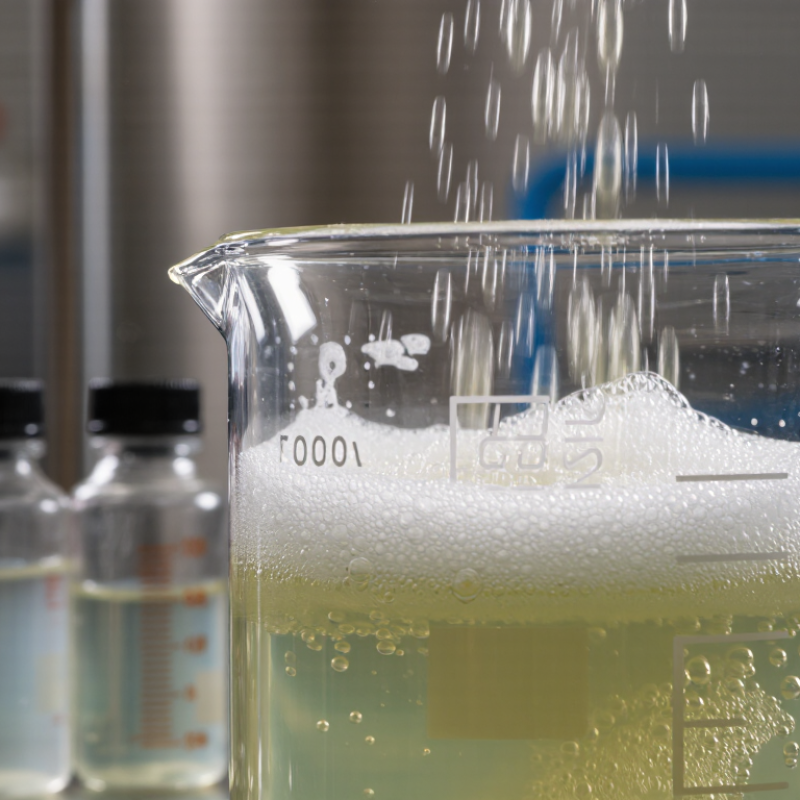
What Is Mineral Oil Based Defoamer and How Does It Work?

Definition and Composition of Mineral Oil Based Defoamers

Mineral oil based defoamers are foam-control additives carried by refined mineral oil. Their composition commonly includes hydrophobic silica, waxes, fatty materials, and emulsifying agents. The oil provides a stable liquid phase, while the hydrophobic particles enter foam films and weaken them.

The carrier matters. Without proper dispersion, the additive may separate during storage or processing.

When added to an aqueous coating, pulp slurry, or wastewater formulation, the defoamer spreads across bubble surfaces. Its low surface tension disrupts the surfactant layer, drains the liquid film, and encourages bubbles to merge and collapse.

MarketsandMarkets’ 2023 Defoamers Market report estimated the overall market at about USD 6.0 billion in 2023. It projected approximately USD 7.8 billion by 2028, representing a 5.3% compound annual growth rate. This figure covers several chemistries, not mineral oil products alone.

In plant trials, dosage often begins near 0.05% and increases gradually. Small dosage, large effect. Excess mineral oil can cause craters, surface defects, or weaker coating adhesion.

A 2024 technical review in the Journal of Coatings Technology and Research also highlighted compatibility as a key performance factor. Therefore, foam collapse alone is not enough evidence. Operators should check gloss, recoating behavior, viscosity, and storage stability. I have found that laboratory results can mislead when shear conditions differ from production equipment. That limitation deserves more attention.

Key Properties That Enable Foam Control

What Is Mineral Oil Based Defoamer and How Does It Work?

Key Properties That Enable Foam Control

Mineral oil based defoamers control foam through low surface tension and limited water solubility. When added to a foaming liquid, the oil spreads across bubble walls. It weakens the thin film and causes bubbles to collapse. Many formulations also contain hydrophobic particles or emulsifiers. These ingredients improve dispersion and help the defoamer reach foam quickly.

Droplet size strongly affects performance. Smaller droplets disperse faster, while larger droplets may remain active longer. Viscosity also matters, especially in high-speed mixing or coating processes. A defoamer that is too thick may respond slowly. One that is too fluid may lose persistence. I have seen small dosage changes alter foam height within minutes. The result depends on temperature, shear, pH, and the liquid’s chemistry.

Compatibility is equally important. An effective defoamer should reduce foam without causing craters, surface defects, or poor adhesion. It must also disperse evenly during storage and production. Overdosing can create new problems. Sometimes, a lower addition level works better. That is easy to overlook. Laboratory screening should include different mixing speeds and realistic process conditions. Yet even these tests can miss long-term effects. Field observation remains valuable, because foam behavior is rarely perfectly predictable.

How Mineral Oil Based Defoamers Disrupt Foam

What Is Mineral Oil Based Defoamer and How Does It Work?

Mineral oil based defoamers control unwanted foam in coatings, inks, wastewater treatment, adhesives, and industrial processing. Their main carrier is mineral oil, often combined with hydrophobic particles or surface-active additives. The formulation must match the process. A product that works well in a thick coating may perform poorly in a low-viscosity liquid.

How Mineral Oil Based Defoamers Disrupt Foam

Foam consists of thin liquid films surrounding trapped air. These films can become surprisingly stable. When the defoamer enters the foam, its oil droplets spread across the bubble surface. This action weakens the film and interrupts the surface forces holding it together. Hydrophobic particles may penetrate the film, creating a fragile spot. The bubble then drains, collapses, and releases air.

The effect is usually visible within seconds. A foaming tank may develop clear patches before the remaining bubbles disappear. However, excessive dosing can cause surface defects, haze, craters, or poor coating adhesion. Performance also changes with temperature, mixing speed, pH, and chemical loading. In practical trials, small dosage steps are safer than one large addition. My own caution is simple: fast foam collapse does not always mean better process performance.

Tips: Add the defoamer slowly under real operating conditions. Test both immediate knockdown and long-term control. Check the treated surface after drying, because hidden compatibility problems may appear later. Keep accurate dosage records. Even minor changes in viscosity can alter the result.

Common Industrial Applications and Formulation Uses

Mineral oil based defoamer is an industrial additive carried by refined mineral oil. It usually contains hydrophobic particles, waxes, or surface-active components. These ingredients interrupt foam formation and help existing bubbles collapse. The oil spreads across the foam film, weakens its structure, and encourages trapped air to escape. In practical testing, a small addition can change mixing behavior within seconds.

Its applications are broad. Water-based paints use it to prevent pinholes, craters, and uneven surfaces during high-speed blending. Adhesive manufacturers add it to reduce foam during filling, pumping, and coating. In wastewater treatment, it limits foam around aeration tanks and transfer lines. Pulp and paper processes also use it when agitation creates persistent surface foam. Construction formulations, polymer dispersions, printing inks, and detergents may require similar control. The best product depends on temperature, shear, pH, and the formulation’s solids content.

Small doses matter. Too little leaves foam behind, while too much can reduce coating gloss, adhesion, or surface uniformity. Compatibility testing should include storage, application, and final performance checks. A technician may compare several addition points, such as the mixing vessel, let-down stage, or filling line. Results are not always predictable. A defoamer that works well in one batch may perform poorly after a resin, pigment, or surfactant changes. It is wise to measure foam height and recovery time instead of relying only on visual judgment. The formulation may still need adjustment.

Selection, Performance Factors, and Handling Considerations

Mineral oil based defoamer controls foam by spreading across liquid surfaces and weakening foam films. Its oil phase separates from water, enters the bubbles, and promotes rapid collapse. Some formulations also contain hydrophobic particles or surfactants. These components improve knockdown, but they can affect compatibility with coatings, adhesives, paper, and wastewater systems.

Selection should begin with the process, not the product label. Check pH, temperature, shear rate, solids content, and mixing time. A low-viscosity defoamer may disperse quickly in a fast-moving tank, while a heavier grade may last longer in a calm vessel. Start with a small dosage trial. Excess material can create surface defects, reduce gloss, interfere with filtration, or leave oily deposits. Small differences matter.

Performance testing should include both immediate foam collapse and long-term control. A defoamer that works in a beaker may fail under continuous aeration or high shear. I have seen promising laboratory results change after production equipment was introduced. That result deserves review, not denial. Test under realistic conditions, using repeated batches when possible. Keep containers sealed, clean, and protected from extreme temperatures. Stir gently before use if separation appears, but avoid vigorous agitation that introduces air. Follow the applicable safety data sheet, wear suitable protective equipment, and prevent water or dust from entering the container. Short trials often miss storage and dosing problems.