Top 10 Balloon Blower Manufacturers in the World
Choosing a Balloon Blower is less about buying the loudest machine and more about matching its output to real work. A party decorator filling a few dozen latex balloons has different needs from a venue crew preparing several hundred arrangements before guests arrive. Speed matters. So do nozzle size, inflation consistency, motor heat, noise, portability, and the time required between jobs. These details become clear beside a crowded worktable, where tangled ribbons and half-inflated balloons can slow a team.
This guide introduces ten manufacturers in the balloon blower market and considers practical differences buyers may encounter. It looks at product range, build quality, operating controls, maintenance needs, available support, and suitability for occasional or frequent use. Manufacturer specifications are useful, but they do not tell the whole story. A machine’s performance can vary with balloon material, operator technique, and the pace of a job. No comparison is perfect.
For that reason, the list is a starting point rather than a universal verdict. Buyers should verify current model details, warranty terms, voltage, and service availability with each supplier before ordering. A compact unit may fit a small studio, while a heavier model could suit event teams that move equipment often. The right choice is one that works reliably, cleans up easily, and suits the balloons being used. Sometimes the overlooked detail is the most important one.
What Balloon Blowers Are and How They Are Used
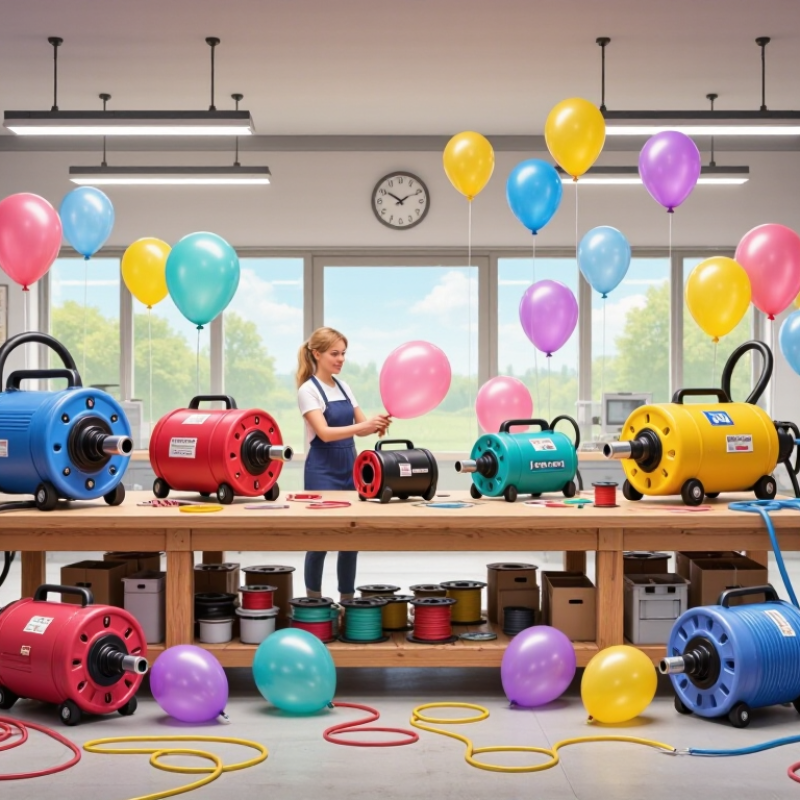
A balloon blower is a powered device that moves room air through a nozzle into an uninflated balloon. It is commonly used to prepare decorations, arches, columns, and table displays faster than hand inflation. Most units have one or two outlets and use a hand control or foot switch to start airflow. They fill balloons with air, not helium, so the balloons generally will not float freely.
During use, stretch the balloon opening over the nozzle, hold it securely, and inflate in short bursts. Stopping near the intended size helps reduce splitting and keeps a display more uniform. A sizing guide can improve consistency when preparing many balloons. Not every balloon behaves alike. Material, shape, and room temperature can affect how quickly each one expands.
For busy setups, a dual-nozzle model can save time, though its airflow and noise may not suit every workspace. Keep intake vents clear, place the unit on a stable surface, and follow the operating instructions. The blower reduces repetitive effort, but it does not replace careful handling or checking each balloon. That part is easy to rush. Dust and scraps near the air intake can also interfere with airflow.
How the Top Balloon Blower Manufacturers Are Selected
Selecting the top balloon blower manufacturers requires more than comparing advertised speed. A useful shortlist weighs measured airflow, pressure stability, continuous operating time, energy use, noise, service access, and documented safety controls. Test units with the same balloon size and record inflation time across repeated cycles. Small differences matter on a busy packing line.
Market demand gives context, not a ranking. Fortune Business Insights’ Balloon Market report valued the global balloon market at US$8.56 billion in 2023 and projected US$12.56 billion by 2032. That growth suggests wider demand for dependable inflation equipment, but it does not prove which manufacturers make the best blowers. Buyers should check whether published performance figures come from repeatable tests, and whether warranties and replacement parts are available in their region.
Safety and durability deserve direct review. Ask for electrical protection details, thermal limits, and maintenance instructions; compare them with relevant machinery-safety guidance, such as ISO 12100. Numbers need context. A high airflow rating may describe a brief peak, not a full shift of operation. One weakness in many comparisons is limited independent testing, so rankings should disclose their test method and uncertainty rather than imply perfect precision.
Profiles of Ten Leading Balloon Blower Manufacturers Worldwide
A global view of balloon blower manufacturing reveals different strengths, not one universal formula. These ten profiles describe common supplier specialities; individual product performance still needs verification.
One profile centers on compact household pumps with simple controls and lightweight housings.
Another focuses on high-output units for decorators handling repeated inflation.
A third emphasizes dual-nozzle designs for different balloon neck sizes.
A fourth builds quieter models for indoor venues, where motor noise matters.
Small details count.
A fifth profile prioritizes durable switches and reinforced power cords.
A sixth offers adjustable airflow for more controlled inflation.
A seventh concentrates on portable units with molded handles and sturdy cases.
An eighth serves distributors seeking consistent packaging and accessible replacement parts.
Specifications can look impressive on paper.
A ninth profile specializes in custom electrical configurations for varied markets, but buyers should confirm voltage and plug compatibility.
A tenth focuses on production testing, checking airflow, heat buildup, and motor consistency across batches.
No supplier is perfect. For a practical comparison, request measured airflow, duty-cycle guidance, warranty terms, and sample units. A short test can reveal awkward controls or excessive heat that a catalogue photograph cannot.
Key Technologies and Trends Shaping Balloon Blower Manufacturing
Balloon blower manufacturing is moving toward tighter airflow control and more efficient motors. A steady stream helps inflate balloons evenly without stretching their necks too quickly. Small details matter. Nozzle shape, hose length, and valve response can all affect filling time and consistency.
Manufacturers are adding pressure sensors and simple digital controls to regulate output. These systems can reduce operator guesswork, especially when different balloon sizes are used on one line. Some production equipment also uses automated feeding and counting, while workers still inspect seams and nozzle fit. That human check remains useful. Sensors can miss defects.
Energy use is another design focus. Brushless motors and improved airflow paths may lower power demand, though results depend on operating conditions and maintenance. Noise reduction matters on busy production floors, too. Still, automation is not automatically better: added controls can make repairs harder when parts or technical support are scarce. Practical designs need accessible components, clear service instructions, and repeatable quality checks. A small leak can waste air all day.