
What Are the Different Types of Conveyor Rollers?
Conveyor rollers may look simple, but their diameter, material, bearing, and drive design can change how a complete line performs. Grand View Research estimated the global conveyor systems market at USD 10.6 billion in 2023 and projected continued growth through 2030. That wider market figure does not measure rollers alone, but it signals why careful component selection matters across warehouses, factories, and distribution centers.
This guide explains the main types of Conveyors Roller, including gravity, powered, grooved, tapered, and heavy-duty models. Each serves a different purpose. A gravity roller may move cartons along a short packing lane; a powered roller can keep parcels moving through a busy sortation zone. Small details matter. A rough surface, a noisy bearing, or a roller that is poorly matched to the load can disrupt the flow. Even a well-built line can disappoint.
The categories are not always cleanly separated: rollers may differ by both drive method and application. That overlap is worth remembering when comparing specifications. A useful expert quotation should be checked against a verifiable interview or technical publication; without one, assigning words to a named specialist would risk misleading readers. The sections ahead focus on practical distinctions, common uses, and selection factors, so readers can compare options with clearer expectations.
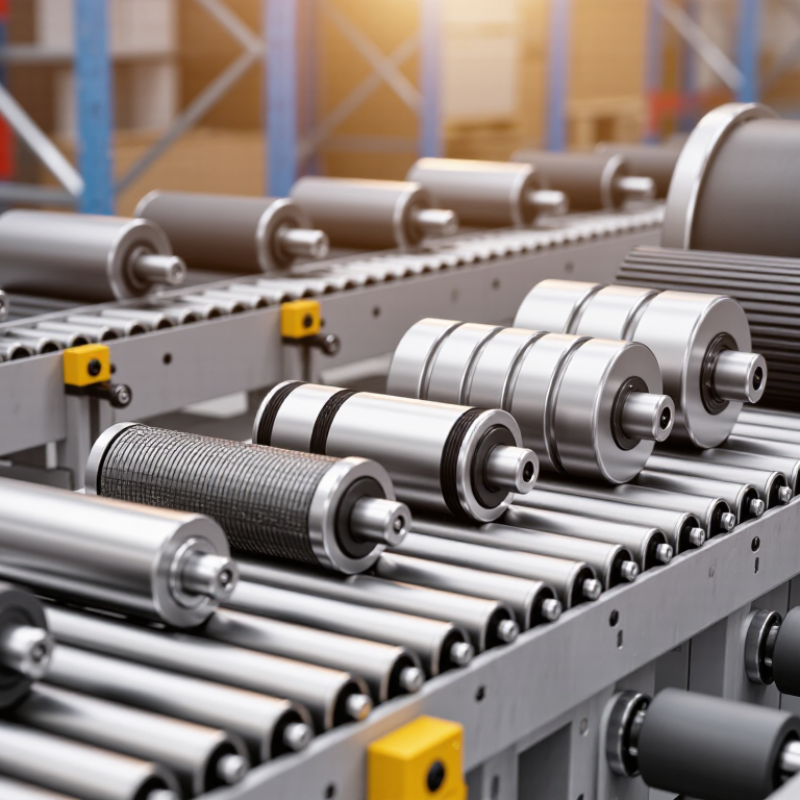
Table of Contents [Hide]
Conveyor Roller Basics and Their Role in Material Handling
Conveyor Roller Basics and Their Role in Material Handling
Conveyor rollers support, guide, and move goods across a conveyor frame. They reduce sliding friction and help operators control product flow. A practical inspection often starts with noise, vibration, and uneven rotation. Small defects can become expensive stoppages.
Gravity rollers suit light cartons and short-distance movement. Powered rollers handle heavier loads and controlled spacing. Tapered rollers help packages turn without drifting. Grooved rollers guide round products, while impact rollers protect loading zones from falling materials. Stainless steel rollers resist corrosion in damp areas. Plastic rollers reduce weight, but they may wear faster under abrasive loads.
Roller choice depends on load weight, width, speed, temperature, and surface condition. A roller should support the product without creating unstable gaps. Too few rollers can cause cartons to sag. Too many can add unnecessary resistance and maintenance points. MHI’s 2024 Annual Industry Report found that 55% of respondents planned to adopt robotics and automation within one to two years. This trend increases the need for consistent roller movement and accurate sensing. CEMA conveyor guidance also emphasizes proper loading, guarding, and component selection. Data helps, but field conditions still matter. Dust, misalignment, and poor cleaning are easy to underestimate. In my experience, the best design is rarely the most complicated one. It is the one technicians can inspect quickly and repair safely.
What Are the Different Types of Conveyor Rollers? - Conveyor Roller Basics and Their Role in Material Handling
| Roller Type | Typical Construction | Common Diameter Range | Drive or Operating Method | Typical Load Capacity | Best Applications | Main Advantages | Key Limitations |
|---|---|---|---|---|---|---|---|
| Gravity Roller | Steel, aluminum, or polymer tube mounted on a bearing and axle | 25–89 mm | Product movement caused by gravity or manual pushing | Light to medium | Cartons, totes, parcels, and pallet handling on level or inclined conveyors | Simple design, low energy use, easy installation, and relatively low maintenance | Requires an appropriate slope or manual force; speed and spacing are difficult to control precisely |
| Powered Roller | Roller with an external chain, belt, line-shaft, or motorized drive system | 38–114 mm | Motor-driven transmission turns the rollers | Medium to heavy | Automated transport, accumulation, pallet movement, and controlled product flow | Provides consistent speed, positive movement, and suitable control for long conveyor sections | Higher initial cost and greater maintenance requirements than gravity conveyors |
| Motor-Driven Roller | Individual roller contains a compact motor and gearbox inside the roller tube | 50–89 mm | Internal electric motor, often controlled by zones | Light to medium | Zero-pressure accumulation, sortation, packaging, and warehouse automation | Compact, quiet, energy-efficient, and capable of independent zone control | Individual rollers can be more expensive to replace and require electrical controls |
| Tapered Roller | Conical roller, commonly steel or polymer-coated, with a larger diameter at the outside end | 45–89 mm at the large end | Gravity or powered drive | Light to medium | Curved conveyor sections for cartons, trays, and containers with rigid bases | Helps maintain package orientation and reduces sliding toward the inside of a curve | Not ideal for flexible bags, unstable loads, or products with irregular bottoms |
| Grooved Roller | Roller with one or more machined or formed grooves for round belts | 38–89 mm | Round-belt or line-shaft drive | Light to medium | Parcel, carton, and small-container conveyors requiring a distributed drive | Supports compact drive layouts and allows belts to transfer motion between rollers | Grooves can limit usable roller surface and may not suit large or unstable loads |
| Sprocket Roller | Roller fitted with welded or molded sprockets for chain engagement | 50–114 mm | Chain-driven roller-to-roller transmission | Medium to heavy | Pallet conveyors, heavy cartons, totes, and applications requiring positive drive | Good traction and reliable movement for heavy loads, including in demanding environments | Chain noise, lubrication needs, and pinch-point guarding must be considered |
| Impact Roller | Heavy-duty roller assembly with rubber or elastomer discs around the tube | 76–159 mm | Usually part of a belt conveyor idler set; belt-driven by material movement | Heavy to very heavy | Loading zones where bulk material drops onto a conveyor belt | Absorbs impact energy and helps protect the belt, frame, and bearings from concentrated loads | Higher weight and cost; elastomer discs wear and require periodic inspection |
| Return Roller | Steel or polymer roller supporting the empty return side of a belt conveyor | 60–159 mm | Rotates freely as the belt passes over it | Designed for belt support | Return strands of bulk-material belt conveyors | Maintains belt alignment and limits belt sag between support points | Not intended to carry conveyed material; damaged bearings can increase belt resistance |
| Rubber-Coated Roller | Steel or aluminum core covered with rubber or another elastomer | 38–150 mm | Gravity or powered drive | Light to medium | Fragile products, inclined conveying, and applications needing extra grip or cushioning | Improves traction, reduces noise, and protects delicate product surfaces | Coating can wear, swell, or lose grip when exposed to unsuitable chemicals or temperatures |
| Polymer Roller | Polyvinyl chloride, polypropylene, acetal, or other engineered polymer tube and components | 25–89 mm | Gravity or light-duty powered operation | Light to medium | Clean handling areas, packaging lines, food-related environments, and corrosion-sensitive locations | Low noise, corrosion resistance, and reduced product marking compared with bare steel | Generally lower temperature and load limits than heavy-duty steel rollers |
| Stainless-Steel Roller | Stainless-steel tube, shaft, and selected bearing components | 38–89 mm | Gravity or powered drive | Light to medium | Washdown areas, humid facilities, food processing, and corrosive environments | Strong corrosion resistance, cleanability, and suitability for frequent sanitation | Higher material cost; corrosion resistance depends on the grade and bearing design |
| Flanged Roller | Roller with raised edges or flanges at one or both ends | 38–89 mm | Usually gravity-driven or used in guided transfer sections | Light to medium | Guiding narrow products, preventing lateral movement, and supporting specialized transfer tasks | Helps retain products and maintain alignment without adding separate side guides | Flanges may interfere with wide, irregular, or overhanging loads |
Note: Diameter ranges and load classifications are typical industry guidelines rather than universal ratings. Actual capacity depends on roller material, face width, bearing design, roller spacing, conveyor frame, product weight distribution, speed, temperature, and operating environment.