
A low reading at the inverter’s terminals can look alarming. Yet the number alone rarely tells the whole story. Is the voltage low with no load, or only when a refrigerator starts? Does it fall at the inverter, or only at a distant outlet? These details help separate a weak battery, undersized cables, excessive load, or an inverter fault. Small clues matter. A warm cable lug, a long cable run, or a display that dips during startup can point toward the cause.
Inverter Output specialist Jordan Lee sums up a careful approach: “Measure the voltage at the inverter and at the load, under the same operating conditions.” That comparison is a practical starting point, not a diagnosis by itself. Readings depend on the inverter’s design, waveform, settings, and measurement method. A basic meter may also misread some modified-wave outputs. Check the manufacturer’s guidance before testing, and avoid opening energized equipment. Safety first.
This guide examines common reasons inverter voltage reads low and explains what each symptom may suggest. It also distinguishes normal voltage changes under load from signs that need attention. A loose connection can be easy to overlook. So can a battery that appears charged but sags under demand. The first measurement may be wrong. That deserves a second look, not a quick parts replacement. Clearly recording the load, battery condition, and test points makes troubleshooting more reliable—and helps a qualified technician assess the system when the cause remains uncertain.
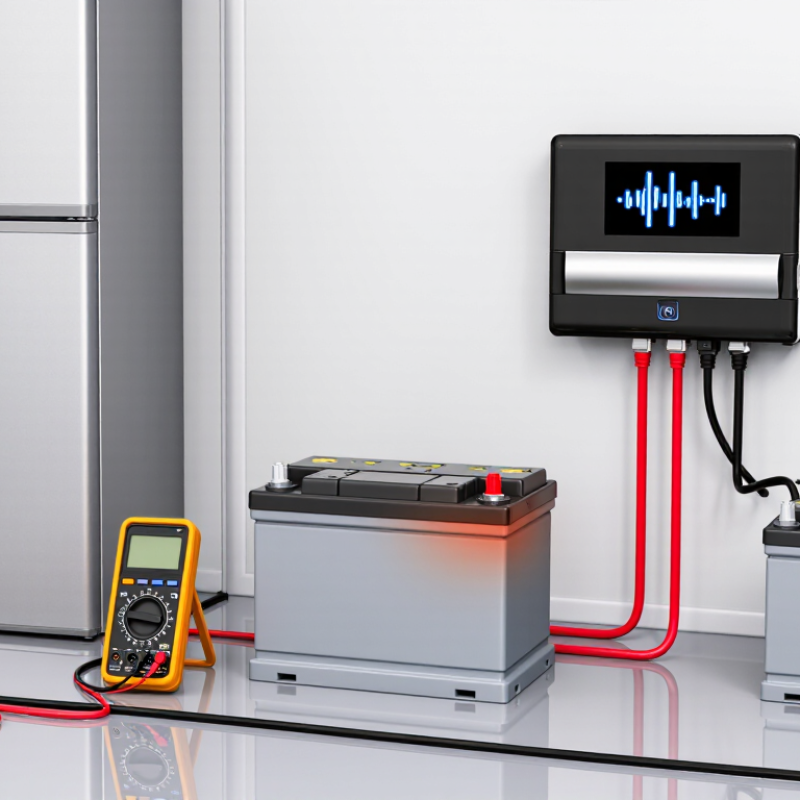
An inverter should produce the AC voltage listed on its rating label or in its manual. Common nominal outputs are 120 volts at 60 hertz and 230 volts at 50 hertz, but models and settings vary. Check both values; voltage alone does not describe the full output. That matters.
A stable inverter usually stays near its rated voltage within the tolerance specified by its manufacturer. A brief dip can occur when a motor, pump, or other heavy load starts. If the voltage remains low, check the reading with a suitable meter and compare it with the inverter’s display. Some meters may read modified waveforms inaccurately. Long, thin cables or loose connections can also cause voltage to fall under load. It is easy to blame the inverter too quickly; the measurement method and wiring deserve a second look.
Tips: Compare readings with no load and with a modest load. Check cable connections, settings, and the manual’s voltage range. If the output stays outside that range, stop using connected equipment and ask a qualified technician to inspect it.
Why Is My Inverter Output Voltage Low?
To confirm low output voltage, check the inverter’s rated output in its manual or on its nameplate. Measure at an approved AC outlet with a suitable, correctly rated meter. Select AC voltage, and compare the reading with the specified range—not just a remembered household value. If you are not trained to take electrical measurements safely, ask a qualified technician. Never probe exposed terminals.
Repeat the measurement with the inverter unloaded, then with a normal, known load connected. A voltage that stays below specification in both tests is stronger evidence of a problem. If it drops mainly under load, the load may exceed the inverter’s capacity, or the battery voltage may be sagging. Check the inverter display for warnings, too. Some modified-wave outputs can confuse ordinary meters; a true-RMS meter may give a more useful reading. One reading can mislead.
Tips: Note the meter reading, load, battery level, and time. Keep the setup consistent when retesting. Small variations happen, and I would not call a unit faulty from one quick check.
Compare true-RMS voltage readings at different load levels to check whether the output is consistently below its nominal value.
Example readings for a 120 V inverter: the dashed line marks 120 V nominal, and the dotted line marks 114 V (an illustrative −5% threshold, not a universal limit). Measure at the inverter output with a suitable true-RMS meter, first with little or no load and then under load. Check the inverter’s specified tolerance; some meters may be inaccurate with modified-sine-wave output.
Low inverter output voltage often begins with the power source. A battery can show a normal reading at rest but sag when a refrigerator or pump starts. This drop may point to a weak battery, low state of charge, or aging cells. Check the battery voltage while the inverter is under load. That matters.
Cable resistance is another common cause. Long, thin, loose, or corroded connections can reduce the voltage reaching the inverter, especially during heavy demand. Inspect terminals for discoloration, looseness, or warmth, but disconnect power before handling wiring. A cable may look fine and still cause trouble. That part is easy to miss.
The load itself may exceed the inverter’s continuous rating, or a motor’s startup surge may briefly pull voltage down. Some units also allow output-voltage adjustment; an incorrect setting can produce consistently low readings. Measure at the inverter terminals with a suitable meter, then compare the result with the specified output range. A basic meter may misread some modified waveforms, so one measurement is not always conclusive.
If voltage remains low, or wiring becomes hot, stop using the system and have a qualified technician inspect it. My first guess would be the battery, but the measurements should decide.
When an inverter’s output voltage looks low, confirm the reading before assuming the unit has failed. Measure at the AC outlet with a suitable meter, and note whether the inverter is powering a load. Some meters give inaccurate readings with modified or irregular waveforms. A single number can mislead.
Compare the reading with the inverter’s stated output range and check it again with a small, known load. If voltage drops sharply, the load may exceed the inverter’s capacity, or the battery may be sagging under demand. Check the battery charge and inspect accessible cables for loose connections, corrosion, or unusual warmth. Do not open the inverter or touch exposed terminals while it is energized. Stay cautious.
If you are not trained to make electrical measurements, stop and ask a qualified technician. Disconnect power only as the manufacturer’s instructions specify. Also check for warning lights, ventilation blockage, and heat buildup; overheating can trigger protective behavior. Keep notes on the voltage, load, battery condition, and when the problem occurs. Those details help narrow the cause, though they may not reveal it on their own. Diagnosis takes patience, and a reading that seems obvious at first can point in the wrong direction.
| What you notice | Possible cause | Safe checks | Useful reference | Next step |
|---|---|---|---|---|
| Voltage is low only when appliances are running. | The load may exceed the inverter’s continuous rating, or a motor’s startup surge may be too high. | Switch off and unplug loads, then reconnect them one at a time. Check appliance running and startup power against the inverter’s specifications. | A motor or compressor can draw several times its running current briefly during startup; the exact surge depends on the appliance. | Reduce the load or use an inverter rated for the required continuous and surge power. |
| Output drops as battery voltage falls, or the inverter beeps or shuts down. | The battery may be discharged, undersized, aging, or unable to supply the current demanded by the load. | Check the inverter’s battery indicator and, if available, review battery readings using the equipment’s normal monitoring display. Avoid shorting battery terminals. | Low-voltage alarm and shutdown thresholds vary by inverter model and battery chemistry; use the specified limits for your system. | Recharge the battery and check its condition and capacity. Have a qualified technician test suspect batteries. |
| The battery appears adequate, but voltage falls noticeably under load. | Long, undersized, damaged, or poorly connected DC cables can cause voltage drop between the battery and inverter. | With the system switched off and isolated according to its manual, visually inspect accessible cables and terminals for looseness, corrosion, heat damage, or damaged insulation. Do not touch exposed conductors. | Cable suitability depends on current, cable length, conductor material, installation method, and the inverter manufacturer’s requirements. | Have damaged connections repaired and confirm cable size and length against the installation instructions. |
| Voltage is low or unstable even with little or no load. | A configuration setting, output-voltage mode, fault condition, or internal inverter problem may be involved. | Check the display and settings against the manual. Record any fault codes. Do not remove covers or adjust internal components. | Common nominal AC outputs include 120 V or 230 V, but the correct value and allowable tolerance depend on the inverter and local electrical system. | Restore the specified settings if appropriate. Contact a qualified service technician if the output remains outside the stated tolerance. |
| A plug-in meter shows a low reading, but appliances seem to work normally. | The meter may be unsuitable for the inverter’s waveform, especially if the inverter provides modified-sine-wave output. | Check the meter instructions and inverter waveform specification. Compare readings only with a meter designed to measure that type of output. | Some average-responding meters can misread non-sinusoidal AC waveforms; a true-RMS meter may be needed, depending on the waveform and meter specifications. | Confirm the reading with suitable test equipment. Do not assume a low reading is harmless if equipment is malfunctioning. |
| One outlet or circuit reads low, while others appear normal. | A faulty extension lead, plug, outlet, connection, or downstream circuit may be causing the issue. | Unplug the load and inspect accessible plugs and cables for damage, discoloration, or unusual warmth. Do not use damaged equipment. | A loose or damaged electrical connection can overheat and create a fire or shock hazard. | Stop using the affected outlet or cable and arrange inspection by a qualified electrician. |
Safety note: Inverter output can cause electric shock, and battery systems can deliver very high fault currents. Do not open the inverter or probe exposed live terminals. If a measurement requires access to live wiring, have a qualified electrician or service technician perform it.
Why Is My Inverter Output Voltage Low?
Low inverter output voltage can result from a weak battery, excessive load, loose connections, or an incorrect output setting. Check the inverter display and compare its reading with a suitable true-RMS meter. Some meters give misleading readings with modified-waveform output. Measure with no load, then again while running a typical appliance. A sharp drop under load often points to battery voltage sag or undersized wiring.
Correct the cause, not just the reading. Recharge or test the battery, reduce the connected load, and inspect cables for corrosion, heat discoloration, or loose terminals. Follow the inverter manual before changing voltage settings. Disconnect power as directed, and ask a qualified technician to inspect any damaged wiring or internal faults. A small detail matters: a terminal can look secure but still develop resistance when warm. It is easy to miss.
Tips: Keep cable runs short and correctly sized. Record voltage during routine checks, both idle and under load. Avoid repeatedly resetting protection alarms; they may signal a real fault. If output stays low after these checks, stop using the inverter until it has been inspected.
WhatsApp us